
Newsom Signs SB 795: California Clears the Last Big Hurdle for E15 Gasoline
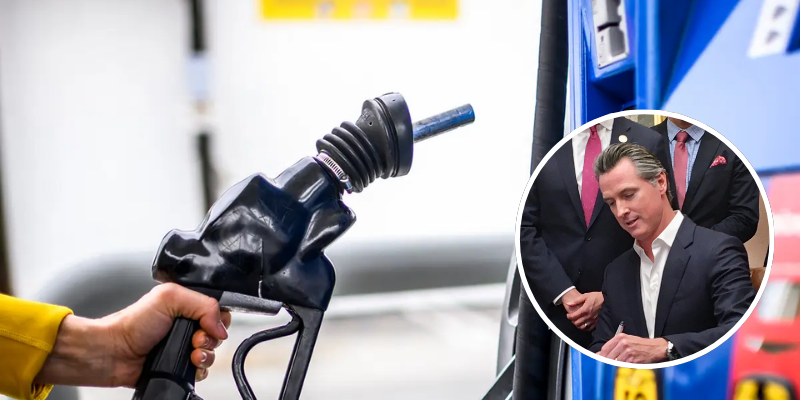
California was the last state in the nation where E15 was off-limits. A new law signed this weekend clears the way, and the ripple effects reach from the gas pump to the dairy barn.
With fuel prices squeezing farms and families alike, Sacramento has made a change that could put a cheaper gallon of gas within reach. It could also give a boost to a Central Valley industry most drivers never think about.
On Saturday, Sept. 19, Governor Gavin Newsom signed Senate Bill 795, authored by Senator Bob Archuleta (D-Pico Rivera). The law clears the path for gas stations to sell E15, a fuel blend of regular gasoline with up to 15% ethanol. Most gas sold in California today is E10, which contains up to 10% ethanol.
“This common-sense bill cuts unnecessary red tape while maintaining our environmental and safety standards,” Newsom said in the Governor’s Office announcement.
Wait, wasn’t E15 already legal?
Technically, yes, and that’s what makes this story so frustrating for supporters. Lawmakers authorized E15 sales last year through AB 30. Stations still couldn’t sell it, because California’s gas pump vapor-recovery equipment had only been certified for blends up to 10% ethanol. Getting new certifications was a slow, costly process, so the fuel was legal on paper but missing at the pump.
SB 795 fixes that bottleneck. According to the official bill text, equipment already approved for E10 can now be used for E15, as long as the equipment manufacturer submits a statement of compatibility to state regulators, signed under penalty of perjury. That provision runs through Jan. 1, 2029. Stations selling E15 will also have to follow labeling rules set by the State Fire Marshal.
The bill passed the Legislature unanimously on Aug. 31, the final day of the session.
What it could mean for your wallet
The Governor’s Office cites a study by UC Berkeley and the U.S. Naval Academy estimating that E15 could lower gas prices by up to 20 cents per gallon. It could also save Californians as much as $2.7 billion a year. The same study notes that stations across the state would need some infrastructure changes to get there.
E15 isn’t new to American drivers. The U.S. Department of Energy’s Alternative Fuels Data Center tracks E15 availability nationwide, and the Governor’s Office notes it was already sold at more than 3,000 stations in 31 states as of 2023.
The timing matters. As we reported last week on record fuel costs hitting farms, energy prices have climbed sharply since the conflict with Iran began. The Governor’s Office, citing Brown University research, estimates Americans have spent over $110 billion on extra fuel costs, nearly $900 per household.
The Central Valley connection
Most U.S. ethanol is made from corn, and California has its own producers right here in the Valley. Aemetis operates a 65-million-gallon-per-year ethanol plant near Modesto. According to the company’s own announcement, the plant also supplies animal feed to about 80 local dairies.
That feed connection is the part many people miss. Ethanol production leaves behind distillers grains, a protein-rich feed that dairies depend on. More demand for ethanol in California could mean more activity at Valley plants and a steadier local feed supply for dairy farmers, who are already facing rising costs and new state water rules.
Don’t expect it at the pump tomorrow
Before you head to your local station looking for E15, there are a few important caveats:
- Stations aren’t required to sell it. Each retailer decides whether E15 makes sense for their business.
- Equipment makers have to file paperwork first. Their compatibility statements must be submitted before stations can use existing pumps for E15.
- The Fire Marshal’s labeling rules are still coming. The law gives the State Fire Marshal until Dec. 31, 2026, to adopt regulations on labeling and safe use of E15 with this equipment.
That means E15 is realistically months away for most drivers. Still, after years of delays, the biggest roadblock is gone.
The bottom line
California was the final holdout on E15, and now the door is open. For drivers, it’s a potential break at the pump. For the Valley, it’s a new opportunity for local ethanol producers and the dairies that rely on their feed. We’ll be watching which stations sign on first.