
The Bug and Virus Behind the Fourth of July Cantaloupe Shortage Valley Growers Need to Know About
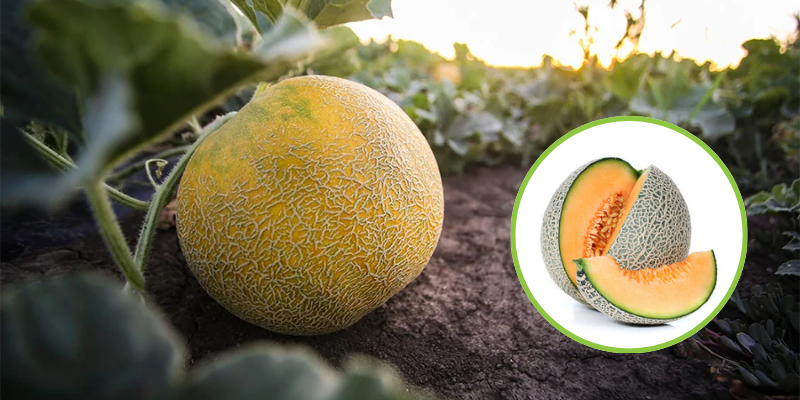
If you were counting on fresh cantaloupe at your Fourth of July cookout this year, you may be out of luck and if you’re a grower, packer, or shipper in our region, this story hits closer to home than most.
A near-total collapse of the Southwest desert cantaloupe crop is sending shockwaves through the fresh produce supply chain right now. The culprit: a one-two punch of historically warm winter temperatures and an explosion of whitefly-vectored plant virus that swept through melon fields across the lower Colorado River Valley, Yuma, Wellton, and Imperial Valley growing districts faster than growers could respond.
This is not a minor disruption. This is a crop failure of a scale the industry hasn’t seen before and it carries lessons every grower in the San Joaquin Valley needs to pay attention to.
What Happened
The root of this crisis begins with a winter that simply never showed up.
According to NOAA’s National Centers for Environmental Information, the meteorological winter of 2025–26 (December through February) ranked as the second warmest on record for the contiguous United States in 131 years of climate data. For the West and Southwest specifically, it was the warmest winter ever recorded, with Arizona, New Mexico, and Utah each shattering their previous warmest-winter records by more than 2°F.
That matters enormously to agriculture. Desert growing regions in Arizona and California’s Imperial Valley typically experience freeze periods in January through March. Those cold snaps do more than just test a grower’s frost protection, they function as a natural biological reset, killing off overwintering pest populations and keeping insect pressure manageable heading into spring.
This year, that reset never came. With no winter die-off and accelerated pest life cycles driven by record heat, silverleaf whitefly (Bemisia tabaci) populations began building abnormally as early as late February. According to UC IPM guidelines, silverleaf whitefly development from egg to adult takes roughly half as long at 86°F as it does at 68°F, meaning a warm early spring can dramatically compress the timeline of a population explosion.
Those whiteflies didn’t just cause feeding damage. They acted as vectors, transmitting Cucurbit Yellow Stunting Disorder Virus (CYSDV), a destructive plant pathogen, from wild host plants directly into melon fields. As UC IPM documents, CYSDV is spread almost entirely by whiteflies, and it doesn’t take many insects to move the virus between plants. Once infected, it takes only three to four weeks for symptoms to appear, meaning by the time growers could see the damage, the virus had already moved well beyond the field.
Pest control advisers mounted an aggressive defense. Field survey data indicates roughly 90% of all insecticide applications on melons this spring were aimed solely at whitefly control. Despite those efforts, once the virus took hold in a field, the outcome was devastating. Growers described plants that looked completely healthy one day and were unrecognizable within 48 hours, vines collapsed, any fruit on the ground stayed stunted, the size of oranges or grapefruits. Many fields were simply walked away from entirely.
The Numbers Tell the Story
The scale of this event is staggering.
The lower Southwest desert typically ships between 15 and 16 million cartons of cantaloupe during this seasonal window. Industry estimates now put this year’s output at no more than 8 million cartons, a deficit of roughly half of expected volume. Yield losses at the field level are running 30 to 40% for growers who got any crop at all, with some packing sheds reporting fields that normally yield 800 cartons per acre pulling only 250 to 300.
For context, USDA ERS data shows California accounts for roughly 63% of total U.S. cantaloupe production, with much of that centered in Fresno and Merced Counties in the San Joaquin Valley and in Imperial and Riverside Counties in Southern California. When the desert region, which leads the early-summer supply window, collapses, there is no immediate backup. The Valley picks up the load, but it takes time.
Major shippers including Legend Produce and Classic Fruit Co. have been forced to issue force majeure notices to retail grocery partners, a legal declaration that an unforeseeable event beyond the shipper’s control has made fulfilling contracts impossible. For many of these operations, it’s the first time in 20-plus years of business they’ve had to take that step.
The message to grocery retail is blunt: there is no fruit. Not less fruit, not delayed fruit, no fruit.
Honeydews are feeling pressure as well, and the regional watermelon crop has suffered significant damage in areas hit by localized freezes earlier in the year, compounding the overall melon supply picture heading into summer.
What This Means for Valley Growers
Here in the San Joaquin Valley, we are part of the recovery story and that’s both an opportunity and a responsibility.
Early Central Valley districts including Huron are positioning to begin cantaloupe harvest within the next 10 to 14 days. Those first loads off the West Side are going to hit a market that is essentially empty and desperate for supply. Pricing is expected to be strong, and retail will be eager to fill bare produce displays.
However, growers in later-planted areas, Los Banos, Dos Palos, Firebaugh, experienced delays due to April rain events, meaning the full transition from desert to Valley supply won’t happen overnight. The disruption window is expected to extend from now through early-to-mid July, with full market recovery anticipated by mid-to-late July when crop quality is expected to be excellent.
If you’re a melon grower: Understand the demand environment you’re shipping into. Retail partners are managing a genuine crisis at the category level and upper management at grocery chains are being alerted to the situation as an industrywide event, not a localized supplier issue. Your loads matter. Communication with your buyers about timing and volume projections is critical right now.
If you’re in pest management or crop production: The whitefly-virus interaction that destroyed the desert crop is not a desert-only problem. Silverleaf whitefly is present in our growing region. UC IPM’s guidelines on CYSDV note that the virus has the potential to cause serious damage to cucurbit production particularly in areas where Bemisia argentifolii (silverleaf whitefly) populations become well established. In the Sonoran Desert, published research has documented CYSDV infection rates of 60 to 100% of plants per field during high-pressure seasons, with late-season plantings often reaching 100% infection. That’s not a distant problem. It’s a documented pattern in the same growing corridor that feeds into our region.
While our Valley climate naturally offers some biological checks that the desert lacked this year, warm winter patterns are an established trend. NOAA’s climate record shows the Southwest has now seen its warmest year on record (2025) and its warmest winter on record (2025–26) in back-to-back years. Robust integrated pest management plans, early-season monitoring protocols, and staying current on virus-resistant melon varieties are worth prioritizing going into future seasons.
For everyone in the Valley: This event is a reminder of how quickly climate variables can cascade into crop failures at a regional scale. One historically warm winter eliminated the natural biological checks growers depend on, gave a destructive insect pest the foothold it needed, and collapsed an entire growing region’s harvest in a matter of weeks.
The Bigger Picture
This isn’t just a cantaloupe story. It’s a story about the compounding risks that come with shifting weather patterns, pest dynamics, and the tight margins on which fresh produce operations run.
The desert melon industry fought hard, aggressive spray programs, attentive field scouting, experienced growers watching their crops daily, and still couldn’t get ahead of it. The virus moved faster than the response.
What we can take from that is not pessimism, but preparedness. Know your pest pressure. Know your disease risks. Build flexibility into your production plans. Maintain strong communication with your buyers and your advisors.
And this summer, if you see Valley cantaloupes on the shelf, know that our growers are filling a hole that the desert simply couldn’t fill this year. That’s the role the San Joaquin Valley plays in feeding this country and it’s never been more visible than right now.