
Ninth Circuit Upholds Federal Water Contract Conversions, Handing Central Valley Growers a Win
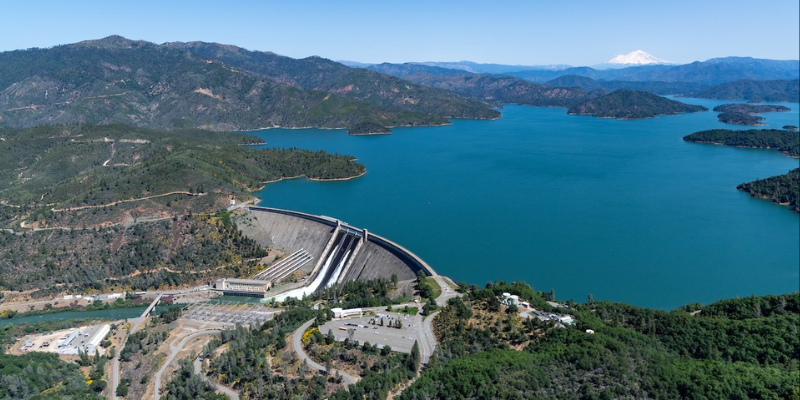
Court rejects environmental groups’ bid to force additional review of permanent water contracts covering dozens of Central Valley Project districts
A federal appeals court has cleared the way for the Bureau of Reclamation to keep converting Central Valley Project (CVP) water service contracts into permanent status without conducting further environmental review, a decision that removes a years-long legal cloud hanging over water supply certainty for a large share of California’s irrigation districts.
On Monday, a three-judge panel of the U.S. Court of Appeals for the Ninth Circuit ruled that Reclamation was not required under the National Environmental Policy Act (NEPA) or the Endangered Species Act (ESA) to study the conversions further before completing them, because the underlying federal statute gives the agency no discretion to refuse a district’s request. Judges Kim McLane Wardlaw, Daniel A. Bress and Gabriel P. Sanchez heard the case, with Judge Sanchez authoring the opinion, in Center for Biological Diversity v. United States Bureau of Reclamation, No. 25-5137. The panel affirmed a 2025 summary judgment decision out of the U.S. District Court for the Eastern District of California, which the Department of Justice had touted at the time as a win for Reclamation’s contracting authority.
What’s actually being converted
The dispute traces back to the Water Infrastructure Improvements for the Nation (WIIN) Act, passed by Congress in 2016. Section 4011 of that law lets CVP contractors holding standard “water service” contracts, under which a district pays Reclamation an annual per-acre-foot fee toward the project’s original construction debt, with no guarantee of identical terms at renewa, convert instead to a “repayment” contract. Under a repayment contract, a district pays off its remaining construction obligation, sometimes hundreds of millions of dollars, and in exchange locks in a permanent water right rather than one subject to periodic renegotiation, with full repayment due within three years of conversion. According to the Ninth Circuit’s own opinion, Reclamation converted 67 water service contracts into repayment contracts between 2020 and 2021 under this provision, with another 16 proposed for conversion since. Reclamation’s WIIN Act program page shows the agency had logged more than 86 total conversion requests as of its most recent public notices, with proceeds from prepayment directed toward CVP storage projects.
Back when the case was first filed, Byron-Bethany Irrigation District, one of the districts named — warned that the litigation put “reliable water supplies for nearly 100 water purveyors” across the state in limbo, and pointed to its own run of zero water allocation for three straight years during the last drought as the type of exposure permanent contracts are designed to blunt.
Where the environmental challenge came from
The Center for Biological Diversity, joined by Restore the Delta and the Planning and Conservation League, first sued Reclamation in May 2020 over an initial batch of conversions, arguing that locking in permanent contracts without additional environmental study ignored the effect of Delta water diversions on freshwater flows, harmful algal blooms and imperiled fish species. At the time the suit was filed, the Center’s Jeff Miller argued the arrangement favored large contractors like Westlands Water District at the expense of the Delta’s ecology, a position the organization has continued to press as more districts have converted in the years since.
The Center for Biological Diversity, the Bureau of Reclamation and the named water districts had not issued public statements reacting to Monday’s ruling as of publication. This story will be updated with comment as it becomes available.
The court’s reasoning
The panel’s holding turned on how much latitude the WIIN Act actually gives Reclamation. The statute directs that Reclamation “shall convert” a qualifying water service contract once a district asks, and separately bars the agency from altering any contract terms beyond the payment structure itself. Because NEPA and ESA review requirements are triggered only when an agency retains real discretion to change course based on what an environmental study finds, the court concluded neither statute applied to a conversion process Congress made mandatory. The opinion distinguished the case from earlier Ninth Circuit rulings, Natural Resources Defense Council v. Jewell and NRDC v. Houston, in which Reclamation had kept enough discretion over contract terms that environmental review was required.
What it means for growers
For CVP contractors that have already converted, or are still negotiating conversions, a group that includes large San Joaquin Valley districts such as Westlands Water District, the ruling closes off one of the main legal tools environmental groups have used to slow or unwind those agreements. District officials and grower advocates have long argued that permanent contracts give farmers steadier, more predictable water costs and a firmer footing for financing and planting decisions, which matters most for permanent crops like almonds, pistachios and wine grapes that require decades to pay back an initial investment.
Whether the Center for Biological Diversity and its co-plaintiffs will ask the full Ninth Circuit for en banc rehearing, or petition the U.S. Supreme Court, hadn’t been announced as of yet.