
For Erling Haaland, the Real Dream Comes After Soccer And That’s Farming
Norway’s World Cup run ended in the quarterfinals this month with a 2-1 loss to England. But over the course of the tournament in the United States, Norwegian forward Erling Haaland managed to do something few celebrity athletes ever attempt: he made local agriculture look cool.
An Unusual Kind of Endorsement
Professional athletes and food marketing usually go hand in hand, but the products they promote are rarely grown down the road. Global soccer stars have long attached their names to soft drinks and snack brands. Haaland, one of the highest-paid players in the sport, has taken a different route. The thing he promotes most enthusiastically isn’t a product at all. It’s a way of eating: whole foods, sourced as close to home as possible.
The habits that put him in headlines trace back to his 2022 documentary, Haaland: The Big Decision, in which he emphasized eating quality food sourced as locally as possible. He has publicly questioned the habit of lumping all meat together in nutrition debates, arguing that there’s a meaningful difference between heavily processed fast food and beef from a grass-fed animal raised in your own community. His approach, sometimes described as “ancestral” or “nose-to-tail” eating, centers on locally raised meat, fresh dairy, honey from nearby producers, and homemade sourdough.
Fueling a 6,000-Calorie Day
Haaland’s training diet involves an enormous daily intake, in the neighborhood of 6,000 calories, structured around simple, recognizable ingredients rather than supplements and shakes. A typical day reportedly starts with eggs and sourdough bread, keeps the midday meal lighter with fish, rice, and vegetables ahead of training, and ends with a substantial dinner centered on steak, organ meats, and potatoes.
Nutrition experts note this regimen is tailored to an elite athlete’s workload and isn’t a model for the average person to copy. But whether or not most of us need a professional athlete’s calorie count, the underlying principle translates: know where your food comes from, and keep the supply chain short.
The Tractor Dream
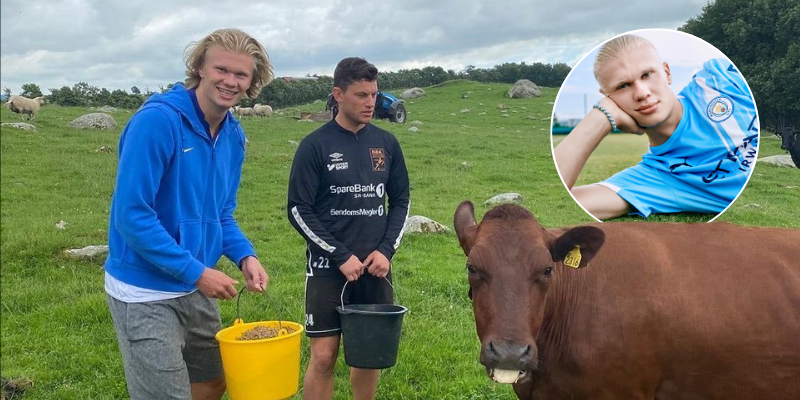
Perhaps the most striking part of Haaland’s story is what he says comes after soccer. Rather than the usual post-career plans of broadcasting or brand-building, Haaland has said his ambition is to have a small farm with animals in Bryne, the rural Norwegian town where he grew up, a plan he first shared in a 2022 ESPN interview. He has since described his retirement dream as tending cattle and driving a tractor.
It’s a reminder that farming still holds a powerful pull, even for someone with every other option in the world available to him.
What It Means for Local Food Systems
When a widely followed athlete talks openly about raw honey, grass-fed beef, and knowing your farmer, it moves the conversation in a way that no marketing campaign can. Millions of young fans who might never read an article about regional food systems are hearing the message anyway.
For those of us working in and around local agriculture, that’s an opening worth taking. You don’t need a striker’s salary or a striker’s appetite to eat the way Haaland does. It can start with a visit to a farmers market, a share in a local CSA, or a conversation with a producer in your own county.
Haaland may be heading home without a World Cup trophy. But if his loudest legacy from this summer is a new generation asking where their food comes from, that’s a win that outlasts any tournament.