
Fong Announces $34 Million for Kern and Tulare Water Storage Projects. Here’s What It Means for Valley Growers
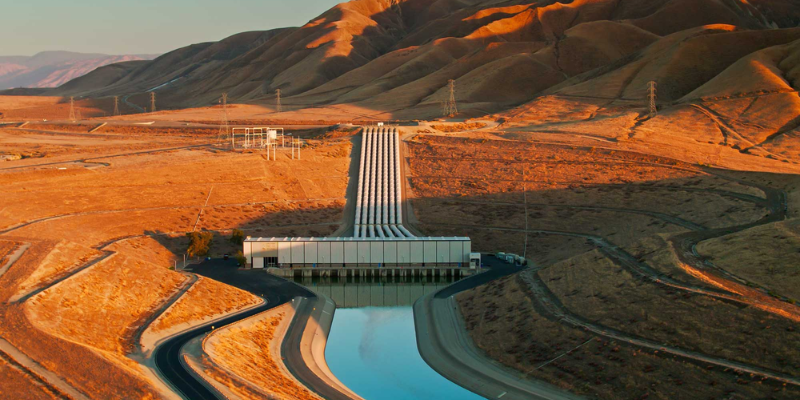
Federal grants will fund a new Kern County water bank and a Tulare County reservoir built in a former mining pit, both aimed at catching wet-year water before it’s lost.
Two Central Valley water storage projects are getting more than $34 million in federal money. Congressman Vince Fong (CA-20) announced the awards Wednesday. The South Valley Conveyance and Storage Project in Kern County will receive $25 million, and the Seaborn Reservoir Project in Tulare County will receive $9.28 million. Both grants come from the Bureau of Reclamation’s Small Storage Grant Program.
“Water is life in the Central Valley,” Fong said. He added that the projects will expand storage, improve groundwater levels, and help the region hold onto water until it’s needed.
A new water bank for Kern County
The larger grant goes to a partnership between two districts. Rosedale-Rio Bravo Water Storage District is working with Irvine Ranch Water District to develop the South Valley Project, a new regional water bank in Kern County that will create new groundwater storage and build conveyance facilities to maximize the capture of flood flows.
In a joint statement, the two districts’ general managers said the funding means construction can begin. They said the project will create 375 cubic feet per second of new conveyance capacity from the California Aqueduct across the San Joaquin Valley to new and existing groundwater banking facilities, so water can be captured in wet years.
According to the districts’ project page, the project is also expected to create roughly 300 acres of intermittent wetland habitat along the Pacific Flyway, support compliance with the Sustainable Groundwater Management Act, and provide a firm water supply to help preserve existing farmland. Irvine Ranch has banked water in Kern County for years. It has a 30-year water banking partnership with Rosedale-Rio Bravo, detailed on IRWD’s water banking page.
The grant followed two rounds of congressional lobbying. Fong and Congressman David Valadao sent a letter in May 2026 urging Reclamation to fund the project, after an earlier letter in February asking the Bureau to include $25 million for it in its FY2027 budget request.
From gravel pit to reservoir in Tulare County
The Seaborn Reservoir is being built on land that used to be mined for gravel. The Mid-Kaweah Groundwater Sustainability Agency describes it this way: the project repurposes an old mining operation into a reservoir of about 260 acres that stores Kaweah River water for flood control and for better timing of groundwater recharge.
Seaborn has been building federal support for several years. In FY2024, House appropriators listed $1 million for the Tulare Irrigation District project under the NRCS Conservation Operations account, requested by Reps. Costa and Valadao (House Appropriations table). The proposed Central Valley Water Solution Act (H.R. 6641) also lists Seaborn at $23 million, for building an internal berm and inlet, outlet and pump facilities off the St. Johns River, plus native habitat improvements (bill text).
Tulare Irrigation District General Manager Aaron Fukuda called the award a major milestone. He described the reservoir as an investment in the region’s farms, jobs and communities, not just in storage.
How the grant program works
The Small Storage Program was created under the Infrastructure Investment and Jobs Act. It funds projects with storage capacity between 200 and 30,000 acre-feet. Federal money covers up to 25% of the cost to plan, design and build eligible surface and groundwater storage projects, so local sponsors pay most of the bill. The current FY2025–2026 funding round, which opened in July 2025, makes about $43.5 million available. The two Valley awards account for most of that total.
For more on the program’s history, the Congressional Research Service reports that Reclamation allocated $98 million to the program from FY2023 to FY2026, including $20 million for four projects in FY2023 and $35 million for six projects in FY2024.
Why it matters for agriculture
Both projects are designed to capture flood flows in wet years and store them underground or in reservoirs for dry years. That matters in a region working to bring groundwater basins into balance under SGMA. The stakes reach far beyond the Valley: according to CDFA, California accounted for nearly two-thirds of the nation’s production of vegetables, fruits and nuts in 2023 (CDFA Agricultural Statistics).
The full announcement, including complete statements from the water district managers, is available on Rep. Fong’s website.