
Feed Costs Are Going Up, Wheat Is Getting More Expensive, and Corn Is Tighter. Here Is What the Latest USDA Numbers Mean for Your Operation
The United States Department of Agriculture released its May 2026 World Agricultural Supply and Demand Estimates (WASDE) report yesterday, one of the most closely watched monthly publications in global agriculture. Released as WASDE-671, this edition carries added significance as it delivers USDA’s first official supply and demand projections for the 2026/27 marketing year across nearly every major commodity. For California growers, the numbers across corn, wheat, soybeans, cotton, rice, and livestock carry real implications for input costs, export demand, and market pricing heading into the heart of the growing season.
Below is a breakdown of the key findings and what they mean for California’s agricultural industry.
Corn: Smaller Crop, Higher Prices Expected
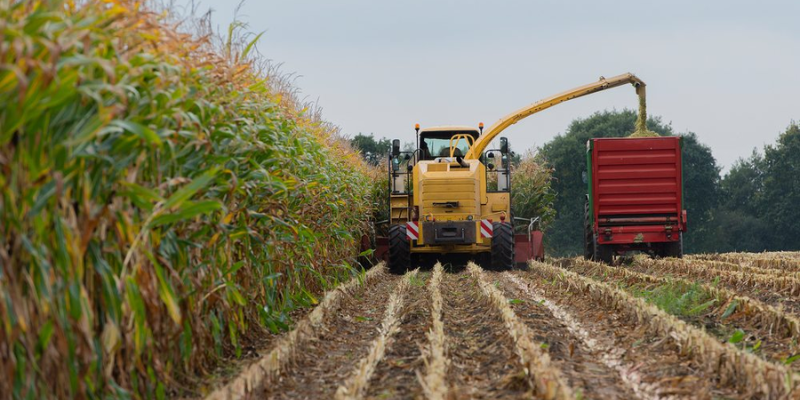
The 2026/27 U.S. corn crop is projected at 16.0 billion bushels, down 6 percent from last year’s record-large crop. USDA pegs planted area at 95.3 million acres, down 3.5 million from 2025/26, and projects a yield of 183.0 bushels per acre based on a weather-adjusted trend model assuming normal planting conditions. That combination of lower area and yield is driving the decline.
Total corn supplies are forecast at 18.1 billion bushels, down 2 percent from last year, even with larger beginning stocks providing a partial cushion. Feed and residual use is projected lower on tighter supplies, while ethanol use holds flat at 5.6 billion bushels.
The headline number for California growers: the season-average farm price for corn is forecast at $4.40 per bushel, up 25 cents from last year. For dairies, feedlots, and livestock operations across the Central Valley that rely heavily on corn-based feed, this uptick, on top of already elevated input costs, is a pressure point worth watching closely as the season develops.
On the global front, world corn production is projected to decline from last year’s record, falling to 1.295 billion metric tons. Global ending stocks are expected to reach their lowest level since 2013/14, tightening the world supply picture and adding underlying support to corn prices internationally.
Wheat: A Rough Year Taking Shape
The wheat outlook for 2026/27 is one of the more notable stories in this month’s WASDE. U.S. all-wheat production is projected at 1.561 billion bushels, down 424 million bushels from last year on sharply reduced harvested area and lower yields. The all-wheat yield is projected at 47.5 bushels per acre, nearly 6 bushels below last year’s record. Winter wheat production alone is forecast down 25 percent, driven primarily by Hard Red Winter losses in the Southern Plains tied to drought and freeze damage.
U.S. wheat ending stocks are projected 18 percent lower than last year at 762 million bushels, and the projected season-average farm price jumps to $6.50 per bushel, up $1.50 from 2025/26. For California’s grain producers, higher wheat prices offer upside on returns. For operations that purchase wheat-based products as inputs, it signals rising costs ahead.
Globally, wheat production is forecast at 819.1 million metric tons, down from last year’s record 843.8 million. Significant production reductions are projected across the major exporting countries including the United States, the EU, Argentina, and Australia. World wheat stocks are expected to decline, tightening the global supply and demand balance heading into the next marketing year.
Soybeans: Bigger Crop, Stronger Crush Demand
The soybean picture for 2026/27 offers a more constructive outlook. The U.S. soybean crop is projected at 4.435 billion bushels, up 173 million from last year, driven by trend yield and modestly higher harvested area. Beginning stocks are also larger, pushing total supplies to 4.8 billion bushels.
The key driver of this market is crush demand. USDA projects U.S. soybean crush at a record 2.750 billion bushels, up 120 million from last year, on strong soybean oil demand for biofuels. Soybean oil use for biofuels is forecast at 17.8 billion pounds, up 3.6 billion from 2025/26, supported by EPA’s Renewable Volume Obligations. That demand is keeping the market tighter than the larger crop alone would suggest.
The soybean meal price is forecast at $310 per short ton, and soybean oil is projected at 70 cents per pound. The season-average soybean price is forecast at $11.40 per bushel, up $1.00 from 2025/26. For California dairies and livestock operations purchasing soybean meal as a protein source, the relatively stable meal price outlook compared to last year’s spikes offers some relief, though the overall cost environment remains elevated.
Notably, U.S. soybean exports are projected to rise to 1.630 billion bushels in 2026/27, a recovery from 2025/26 when tariff measures significantly curtailed shipments to China. If trade conditions continue to normalize, improved export demand could provide additional support to soybean prices through the marketing year.
Cotton: Smaller U.S. Crop, Higher Price Forecast
U.S. cotton production for 2026/27 is projected at 13.3 million 480-pound bales, down from 13.9 million in 2025/26, on lower harvested area. Despite the smaller crop, the average farm price for upland cotton is forecast at 73 cents per pound, up 10 cents from last year’s 63 cents — as tighter ending stocks support prices. U.S. cotton exports are projected to increase slightly to 12.3 million bales, keeping export demand as a steady underpinning for the market.
For California’s San Joaquin Valley cotton producers, the combination of a tighter supply outlook and a higher projected price is a modestly encouraging signal, though planted acreage decisions for 2026 have already been largely made. The broader implication is that cotton’s competitive position relative to other row crops may strengthen heading into next season’s planting decisions.
Rice: Sharply Lower U.S. Production Projected
The U.S. rice outlook for 2026/27 stands out for its sharp projected decline in production. All rice output is forecast at 175.2 million hundredweight, down 15 percent from last year — on significantly lower harvested area. Planted acreage is projected at just 2.32 million acres, versus 2.81 million in 2025/26, a reduction that reflects both economic pressures and competing crop opportunities.
California medium and short-grain rice producers should note the farm price forecast. The California medium/short-grain price for 2026/27 is projected at $20.00 per hundredweight, modestly below last year’s $20.30 but still historically strong. With lower national production and largely stable domestic use, the supply tightening could provide price support as the marketing year progresses. U.S. rice ending stocks are projected down 18 percent from the prior year to 42.3 million hundredweight.
Livestock & Dairy: Cattle Tight, Pork and Poultry Up
For California’s livestock and dairy sectors, this month’s WASDE carries several important signals.
- Beef: Production is forecast lower in 2027 as herd rebuilding and increased heifer retention limit the availability of fed cattle for slaughter. Fed cattle prices are projected above 2026 levels on expected supply tightening. For California feedlots and beef operations, tighter cattle supplies mean higher cattle costs are likely ahead.
- Pork: Pork production is forecast to increase in 2027 on improved sow productivity and heavier carcass weights. Hog prices are projected lower with increased production, which could modestly ease one protein cost component for food processors and further processors operating in the state.
- Dairy: The all-milk price for 2027 is forecast at $20.95 per hundredweight, lower than 2026, with cheese and butter prices forecast higher but whey and nonfat dry milk prices lower. For California’s dairy producers, the outlook reflects a market working through continued supply growth and moderating demand signals in certain product categories.
- Eggs: Egg production is forecast higher in 2027, though the 2026 forecast was lowered on reductions to the laying flock from recent hatchery data. Egg prices are forecast higher in 2027 on improved demand.
The Big Picture for California Growers
Taken together, the May 2026 WASDE paints a picture of a tightening global supply environment across several key commodities heading into the 2026/27 marketing year. Corn and wheat prices are both projected higher. Cotton is expected to strengthen. Soybean demand, particularly for crush and biofuels, is robust enough to keep prices elevated despite a larger crop. And livestock markets are navigating a delicate balance between herd rebuilding and production levels.
For California’s growers and agricultural businesses, the implications cut both ways. Higher commodity prices offer improved revenue potential on the production side, but they also translate into elevated feed, input, and operating costs for livestock, dairy, and processing operations. The trade environment, particularly around export demand for soybeans and cotton, remains a critical variable that could shift the balance in either direction as the marketing year unfolds.
As always, the May WASDE is an early-season benchmark. With planting still underway across much of the country and Southern Hemisphere crops months from harvest, USDA notes explicitly that these projections are highly tentative. Conditions on the ground, weather, planting progress, and trade policy developments, will drive revisions in the months ahead. The next WASDE release is scheduled for June 11, 2026.
Read the Full Report
For the complete May 2026 WASDE supply and demand tables, including full U.S. and world projections for all commodities, access the report directly from USDA: WASDE-671 — May 12, 2026 Full Report (PDF).