
Farm Bill Faces a Short Window Before the New Congress Takes Over: What’s at Stake for California
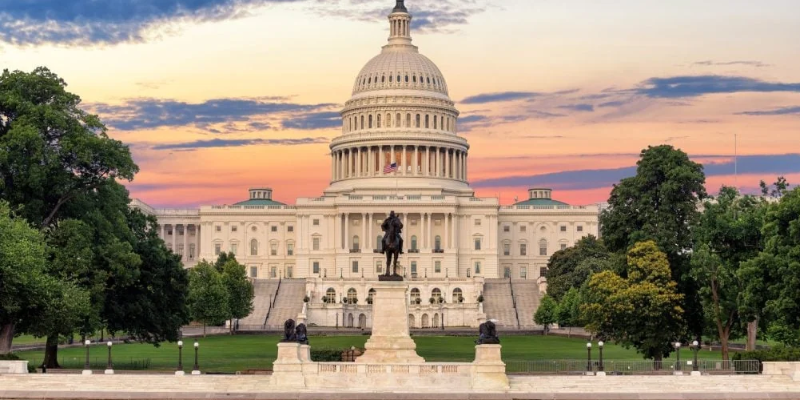
Congress returns to Washington on Monday with only a few weeks left to finish a five-year farm bill before Democrats take control of both chambers in January.
The last full farm bill passed in 2018. Congress extended it three times, and the most recent extension expired September 30. Both chambers’ Agriculture Committees have passed their own versions this year, and the top negotiators from both parties say they want a final deal before the year is out. But a fight over how much states should pay for food assistance is still standing in the way, and Tuesday’s election has changed the math.
Where the bill stands
The House passed its version, the Farm, Food, and National Security Act of 2026 (H.R. 7567), on April 30 by a 224-200 vote. It was the first time a full farm bill cleared the House floor since 2018, and California Rep. Adam Gray was among the Democrats who backed it.
The Senate Agriculture Committee, led by Chairman John Boozman, R-Ark., approved its version, the Agricultural Act of 2026 (S. 5526), on September 16 on a party-line vote. An earlier attempt failed 10-11 in August. The bill hasn’t had a vote on the Senate floor, where it will need 60 votes, so at least some Democrats will have to sign on.
The two bills still need to be merged into one. That work falls to the “four corners,” the top Republican and Democrat on each chamber’s Agriculture Committee. After the September vote, Boozman said he remains committed to “getting bipartisan Farm Bill 2.0 across the finish line.” House Agriculture Committee Chairman Glenn “GT” Thompson, R-Pa., called a full five-year farm bill his top priority. Sen. Amy Klobuchar of Minnesota, the Senate committee’s top Democrat, told Agri-Pulse this week she is still working with Boozman and House leaders on a bipartisan bill.
The calendar is tight. Government funding runs out December 11 under the stopgap spending bill signed in September, and that deadline will take up much of the session. Ag lobbyist Randy Russell of The Russell Group told Brownfield Ag News he expects a shorter session than usual, with fewer bills moving, now that Democrats know they’ll hold the gavels in January.
The sticking point: who pays for SNAP
The biggest obstacle isn’t a farm program at all. It’s a change to the Supplemental Nutrition Assistance Program (SNAP) in last year’s One Big Beautiful Bill Act.
Starting in federal fiscal year 2028, states will have to pay part of the cost of SNAP benefits for the first time. How much each state pays depends on its payment error rate, which measures how often benefits are calculated wrong. According to California’s Legislative Analyst’s Office, states with error rates of 10% or more will pay 15% of their benefit costs. House Agriculture Committee Republicans say the change holds states accountable for running the program accurately. The Center on Budget and Policy Priorities, which opposes it, estimates it would shift about $9 billion onto state budgets in the first year alone.
The Senate committee’s bill pushes the start date back one year, to October 2028, according to the Congressional Research Service. Democrats want a two-year delay, and every Democrat on the committee voted against the bill. Russell told Brownfield that Democratic leaders on both Agriculture Committees have made clear they want two years, and that if they don’t get it now, they’re likely to push for it next year with their new majorities.
California has a lot riding on the outcome. The error rate for CalFresh, California’s version of SNAP, is about 11%, which puts the state in the top tier. The Legislative Analyst’s Office estimates that would mean about $2 billion a year in new state costs, and the California State Auditor warned it could reach $2.5 billion in 2028. The same federal law also cut the federal share of CalFresh administrative costs from 50% to 25% starting this fall, and the Senate bill doesn’t change that part.
What’s at stake for California growers
Much of the money for farm safety nets and many specialty crop priorities was already locked in through last year’s One Big Beautiful Bill Act, according to Western Growers. The farm bill carries the policy changes that didn’t make it into that law.
The House bill drew praise from California farm groups, including the California Farm Bureau and Western Growers. Provisions California groups have highlighted include:
- Trade promotion: Doubled funding for the Market Access Program, the Foreign Market Development Program and Technical Assistance for Specialty Crops, which help almonds, pistachios, walnuts, citrus and dairy compete overseas.
- Permanent crops: Stronger disaster and risk management tools for orchards and vineyards, a priority the Almond Alliance singled out.
- Specialty crop grants: Changes to the Specialty Crop Block Grant Program and more support for specialty crop research.
- Dairy exports: A section protecting common food names like “parmesan” in foreign markets.
Growers who rely on conservation programs should also watch the final text. The Senate committee bill would temporarily shift nearly $2 billion from the Environmental Quality Incentives Program (EQIP) to other USDA conservation programs, with higher EQIP funding restored in fiscal year 2031. Democrats want that money kept in EQIP and the Conservation Stewardship Program, and negotiators are still working on it, Duane Simpson, president of the National Council of Farmer Cooperatives, told Hoosier Ag Today.
Western Growers has also asked Congress for $5 billion in additional relief for specialty crop growers to cover losses, high input costs and market disruptions. Russell said it’s too early to know whether more farmer aid will be part of any year-end package.
Prop 12 is on the table. One of the biggest differences between the two bills lands squarely on California. Section 12006 of the House bill would bar states from enforcing their livestock production standards on animals raised in other states. That would override Proposition 12, California’s housing standards for pork, eggs and veal, for anything raised outside California. The Senate bill doesn’t include it. Supporters, including the U.S. Chamber of Commerce, say a patchwork of state rules raises costs and blocks interstate trade. Critics, including an analysis from Harvard Law School’s animal law program, warn the language could reach well beyond Prop 12 and shift power away from states. Simpson named Prop 12 as one of three issues negotiators still have to settle, along with SNAP and conservation funding.
What happens next
There are three likely paths from here:
- A deal this year. The four corners settle the SNAP question and pass a final bill on its own, or fold it into a larger year-end package such as the December government funding bill.
- Another extension. Congress buys more time and hands the full rewrite to the new Congress.
- A fresh start in January. Democrats write their own bill with new committee leaders. Fresno Rep. Jim Costa and Ohio Rep. Shontel Brown are both running to become the top Democrat on the House Agriculture Committee, which would put the winner in line for the chairmanship.
Farm groups disagree on the odds. Simpson stated he puts the chances of a deal this year at about 80-20, arguing that “you don’t get this close and then walk away.” Troy Bredenkamp of the Renewable Fuels Association, in the same report, was more skeptical. He said Democrats may feel emboldened to wait until January, and that House Republicans could struggle to find votes if members who lost Tuesday don’t come back to town.
Other farm items could also ride along before the year ends. The Senate bill already includes year-round E15 sales, and Russell said he believes President Trump would sign year-round E15 if Congress sends it to him.
Former Sen. Heidi Heitkamp, D-N.D., stated the election is “a reset button for bipartisanship” on farm policy. For California growers, the next five weeks will show whether that reset starts now or waits until January.
Ag Center News will keep following the farm bill as Congress returns next week.