
Clock ticks toward Aug. 19 as new Canada tariffs threaten California’s top farm export market
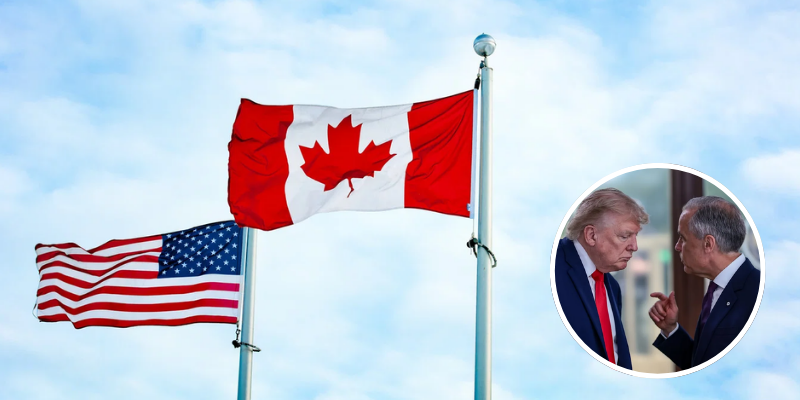
California farmers are bracing for another blow in a trade fight they didn’t start, as a fresh round of U.S. tariffs on Canadian goods prepares to take effect Aug. 19, a deadline that has growers, vintners and commodity groups across the state watching nervously for Ottawa’s response.
On July 20, President Trump signed three proclamations imposing an additional 50% tariff, under Section 338 of the Tariff Act of 1930, on certain Canadian goods spanning motor vehicles, dairy and alcoholic beverages. According to the U.S. Trade Representative, the actions are intended to offset what the administration describes as Canada’s discriminatory treatment of U.S. commerce, including provinces pulling American alcohol from their shelves and Canada’s treatment of U.S. dairy and auto exports. The White House fact sheet notes the duties apply regardless of whether a good qualifies under the U.S.-Mexico-Canada Agreement, but exempts energy, potash, the key fertilizer ingredient California growers import heavily from Canada, products already subject to Section 232 duties, and certain other goods.
The stakes for California are hard to overstate. The state’s agricultural exports totaled $23.8 billion in 2024, and Canada ranks among its very top destinations, consistently California’s largest single-country agricultural trading partner by volume, absorbing lettuce, strawberries, table grapes and citrus from the Salinas and San Joaquin valleys. When trade with Canada wobbles, few states have more to lose.
A wine industry already on the ropes
Nowhere is the pain more concentrated than in the wine sector, which entered this latest escalation already battered. According to the Wine Institute, Canada was the single most important export market for U.S. wine, accounting for 36% of U.S. wine exports in 2024.
That market has largely evaporated. Beginning in March 2025, most Canadian provinces pulled American wine, beer and spirits from their government-run liquor stores in retaliation for earlier U.S. tariffs. Because provincial liquor boards are government-controlled monopolies, the removal was effectively total: California wine disappeared from Canadian shelves almost overnight, and more than a year later it has not returned across most provinces.
The financial toll has been steep. Drawing on U.S. Census Bureau trade statistics, the Wine Institute’s full-year 2025 fact sheet found U.S. wine exports to Canada fell 78% year over year, from $460 million in 2024 to $103 million in 2025, a $357 million loss in export value that turned a $254 million trade surplus into a deficit. For a California wine industry already contending with declining consumption, oversupply and rising farming costs, the loss of its top export destination has compounded an already difficult stretch.
The politics have hardened rather than eased. Canada’s provincial and federal governments imposed retaliatory measures on U.S. wine in March 2025, and provincial leaders have since tied any return of American alcohol to broader concessions on U.S. tariffs. Meanwhile, some provinces have leaned into promoting their own domestic wines, raising the longer-term worry among California producers that Canadian consumers may simply grow accustomed to local labels and not switch back.
Not everyone sees only downside
The industry is not uniformly opposed to the tariff strategy. Some California winegrape growers have argued that reciprocal tariffs could, over time, level a playing field they see as tilted against them, pointing to the higher regulatory and labor costs of farming in California compared with competitors abroad, and to the government support European growers receive. In this view, the short-term disruption is a cost worth bearing if it produces a more favorable long-term trade position and stronger footing for domestic producers in their own market.
Others in the sector are more skeptical, noting that the domestic wine distribution system is interconnected in ways that make the picture complicated: distributors that move California wine also depend on revenue from imported wine, so tariffs that raise the cost of foreign bottles can ripple back onto domestic producers in unexpected ways.
What to watch
The immediate question is whether, and how, Canada responds to the Aug. 19 tariffs. Under the statute, the 30-day window between the proclamations and the effective date leaves room for negotiation, and the duties could be adjusted or withdrawn before they take hold. But Ottawa has a track record of targeted retaliation: its March 2025 countermeasures reached wine, fresh fruit, poultry and dairy, categories that map directly onto California’s export strengths. A comparable response this time would land squarely on the state’s growers.
For now, California farm groups continue to press a consistent message in trade discussions: what the sector needs above all is stability and fairness. With the state’s agricultural exports supporting well over 100,000 jobs and billions in additional economic activity, the coming weeks, and Canada’s next move, will matter well beyond the vineyard.