
California’s Tomato Harvest Wraps Up on Target, but the Crop Is Smaller Than Recent Years
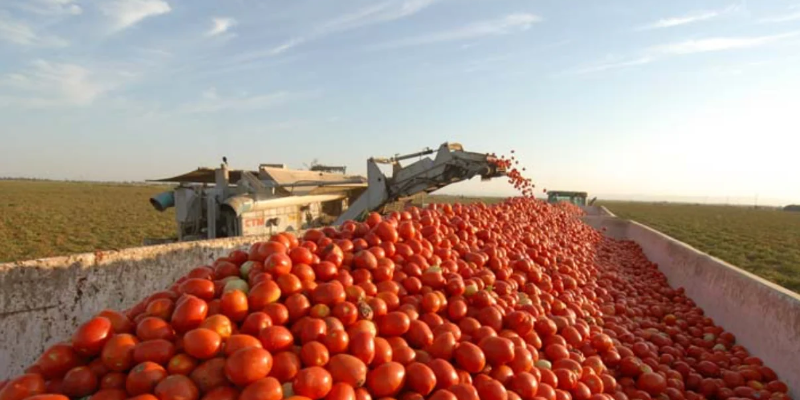
California’s 2026 processing tomato harvest is almost done, and growers are on pace to deliver right about what the canneries contracted for. The latest weekly tonnage projections from the Processing Tomato Advisory Board (PTAB), covering the week ending Oct. 17, put deliveries at roughly 100.2% of processors’ target of 9.34 million metric tons.
Hitting the target is good news for growers with contracts. But the crop is still smaller than usual. Deliveries are running about 11% behind last year at this point in the season and nearly 7% below the five-year average.
By the numbers
Deliveries are now slowing to a trickle as the last fields come out. Here is where the season stands, based on PTAB’s weekly tonnage projections:
| Measure | Amount |
| Delivered, week ending Oct. 17 | 77,332 metric tons (85,244 short tons) |
| Projected, week ending Oct. 24 | 18,781 metric tons (about 20,700 short tons) |
| Projected season total through Oct. 24 | 9,356,911 metric tons (10,314,229 short tons) |
| Processors’ target (as of Oct. 9) | 9.34 million metric tons |
| Organic deliveries, week ending Oct. 10 | 13,321 metric tons (14,684 short tons) |
The season began on about the same schedule as 2025, and organic tomatoes again made up a meaningful share of the crop. Keep in mind the most recent weeks are PTAB estimates, so final totals may shift slightly.
Why the crop is smaller
The smaller crop was by design. In its May 29 Processing Tomato Report, USDA’s National Agricultural Statistics Service (NASS) put 2026 contracted acreage at 185,000 acres. That’s 15,000 fewer than last year’s final contracted plantings, the third straight year of decline, and the lowest level in over 30 years.
NASS’s Aug. 28 forecast projects contracted production at 10.0 million tons, about 10% below the 11.1 million tons contracted in 2025. The agency tied the cutbacks to an industry working to bring inventories back in line with market demand.
The field news was better. NASS reported above-average yields of 54.9 tons per acre, though short of 2025’s record highs. Harvest also started in the last week of June, nearly a week earlier than usual.
Fresno County remains the state’s top processing tomato county, with 49,000 contracted acres for 2026. Here is how Valley counties compare, based on the NASS May report:
| County | 2025 planted acres | 2026 contracted acres |
| Fresno | 52,700 | 49,000 |
| Merced | 23,400 | 21,000 |
| Kings | 19,000 | 18,000 |
| San Joaquin | 15,100 | 13,800 |
| Stanislaus | 7,900 | 6,700 |
| Madera | 5,100 | 5,800 |
| Kern | 5,200 | 4,100 |
The 2025 numbers include both contracted and open-market acres, while 2026 numbers are contracted acres only, so the comparison is approximate. Madera was the one Valley county where contracted acres for 2026 topped last year’s plantings.
What to watch for 2027
With deliveries projected right at target, the industry’s plan to shrink the crop and work down inventory appears to be on track. Whether contracts rebound next year will depend on how much of that backlog has cleared.
Growers can watch two upcoming releases for the first clues. NASS publishes processors’ contract intentions for the coming season each January, posted on its Processing Tomato Reports page. PTAB will also post its final 2026 tonnage on its final reports page once inspections wrap up.
For Valley growers weighing 2027 rotations, those two reports will show whether the market has turned the corner.