
California Declares Statewide Emergency Ahead of Historic El Niño; Farmers Urged to Prepare Now
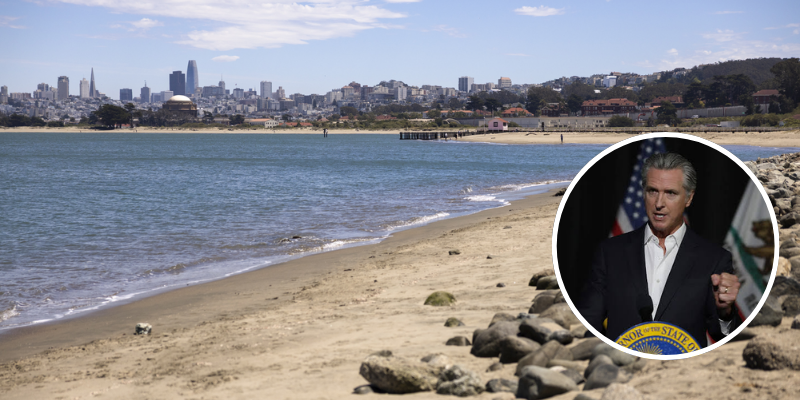
Governor Gavin Newsom proclaimed a statewide state of emergency today to speed California’s preparations for what forecasters warn could be the strongest El Niño on record, a move that carries direct consequences for the state’s growers, ranchers, and rural communities heading into the wet season.
The signed proclamation mobilizes state resources and streamlines procurement so agencies can act before winter storms intensify rather than after. It directs the state to lead flood-risk-reduction efforts, stage flood-fighting supplies such as sandbags and pumps, and pre-position critical equipment. Caltrans will position traffic-control, road-closure, and snow-removal equipment along the highways most at risk, and the California National Guard is being readied for flood response, search-and-rescue, engineering, and logistics missions. State environmental and natural resources agencies will fast-track permitting to help local partners reduce flood, landslide, and debris-flow risks.
“We are not waiting for this season’s storms to be on our doorstep,” said Cal OES Director Caroline Thomas Jacobs in the announcement, noting that the Governor’s Office of Emergency Services is coordinating state and local partners and identifying needs before impacts occur.
Why forecasters are alarmed
According to NOAA’s Climate Prediction Center El Niño advisory, El Niño is strengthening, with a greater than 90% chance of a very strong event during the fall and winter of 2026–27. State officials cite federal forecasts putting the odds of a historically strong event at roughly 75%. El Niño is a natural climate pattern marked by warmer-than-average water in the tropical eastern Pacific, which can shift storm tracks toward California and load the atmosphere with more energy, raising the risk of repeated heavy rain, high winds, mountain snow, flooding, landslides, debris flows, and coastal flooding.
What it means for agriculture
For California farms, a super El Niño is a double-edged forecast. A wetter winter can ease long-running drought and recharge groundwater, but warmer storms tend to fall as rain rather than Sierra snow, and it is the spring snowpack, not winter rain, that sustains reservoirs and irrigation deliveries through the growing season. That means a very wet winter does not guarantee a strong water year for growers.
The more immediate concern is flooding. The 2023 atmospheric rivers submerged farmland across the Central Valley and Central Coast, broke levees, and caused damage that some operations are still recovering from years later. Growers in Kern, Monterey, and other counties are already clearing ditches and culverts, dredging drainage channels, reinforcing outer banks, and planting cover crops to hold soil in place.
The California Department of Food and Agriculture maintains a Flood Recovery Resources hub for farmers and farmworkers, covering everything from produce-safety guidance on flood-contaminated fields to mental-health support, animal-emergency response through CARES, and disaster-assistance referrals. CDFA’s Produce Safety Program also offers farm flooding response resources and a flooding fact sheet that specialty-crop growers should review before the first major storm, flooding can introduce biological hazards to fields, and re-entry and harvest decisions carry food-safety implications.
Additional actions
Alongside the El Niño proclamation, the Governor issued states of emergency for earlier storm and disaster recovery in Glenn, Humboldt, Kern, Mendocino, and Santa Barbara counties and for a major sewage spill in Lake County, and terminated 34 older emergency declarations from 2023 and 2024 that are no longer needed.
How to prepare
State officials are urging every Californian, farm operators included, to act now: know your flood risk, clear drains and culverts, keep an evacuation and emergency plan ready for family, staff, and livestock, and never drive through floodwater. Residents can sign up for county emergency alerts through Listos California.
“El Niño does not guarantee a wet winter or any particular storm,” the Governor’s Office noted, “but it heightens the risk of strong storms in California.”