
$19.75 an Hour Starting Jan. 1: California’s New H-2A Wage Floor Is Now Law
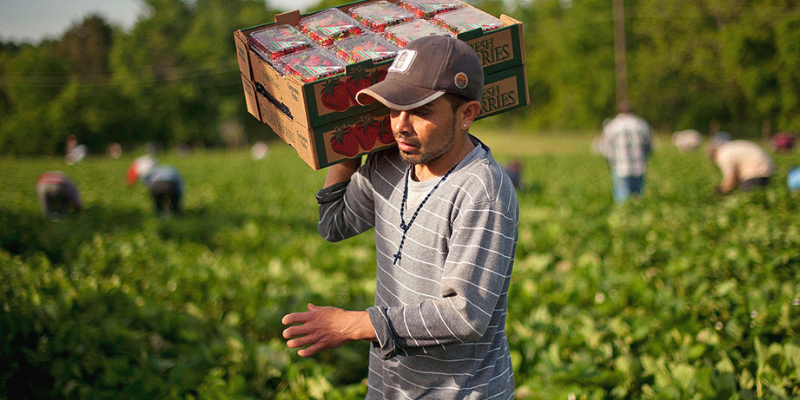
On his last day to act on bills, Gov. Gavin Newsom signed AB 2646. Starting Jan. 1, 2027, H-2A workers and the local workers doing the same jobs must earn at least $19.75 an hour, with raises every year after. Farm groups fought it to the end.
California just set its own wage floor for H-2A farmworkers, and it starts in less than three months.
Gov. Gavin Newsom signed Assembly Bill 2646 on Sept. 30, the final day of his final bill-signing season as governor. The bill was listed in the governor’s legislative update that day alongside a long list of other signings, with no press release of its own.
The new floor is $19.75 an hour. That’s nearly $3 above today’s $16.90 state minimum wage, and it rises every year after that.
What AB 2646 does
The law sets a $19.75 minimum hourly wage for H-2A workers and for domestic workers in “corresponding employment,” meaning local workers doing similar jobs in the same county, according to Western Growers.
- Start date: Jan. 1, 2027.
- Annual increases: Every Jan. 1 after that, the rate goes up by the Social Security cost-of-living adjustment.
- Who it covers: H-2A guest workers, plus any California resident working the same kind of job alongside them.
For comparison, California’s general minimum wage rises to $17.40 on the same date. That puts the new H-2A floor about $2.35 an hour higher.
How we got here
AB 2646 is California’s answer to a federal pay cut. In October 2025, the U.S. Department of Labor changed how it calculates the Adverse Effect Wage Rate, the minimum wage for H-2A workers. It also let employers deduct housing costs from paychecks, and projected the changes would save farmers about $2.5 billion a year.
In California, the H-2A rate fell from $19.97 an hour to the $16.90 state minimum, according to the California Farm Bureau. Researchers at Michigan State estimated about 70% of California H-2A employers had cut pay to the state minimum, and that doing so statewide could save farmers up to $100 million this year.
The United Farm Workers sued over the federal rule and sponsored AB 2646 to restore a higher floor at the state level. The court fight has its own twists:
- May 14, 2026: A federal judge in Fresno declined to temporarily block the federal rule while the case continued.
- Aug. 26, 2026: The same judge, U.S. District Judge Kirk Sherriff, struck the rule down and ordered the Labor Department to write a new wage method. He left current wages in place for now, but warned growers they may owe back pay from the date of his ruling.
- Sept. 30, 2026: Newsom signed AB 2646, setting a state floor no matter how the federal rate shakes out.
The fight in Sacramento
AB 2646 was written by Assemblymember Maggy Krell, D-Sacramento, and sponsored by the UFW. It cleared the Assembly this spring and passed the Senate 30-8.
Krell argued the bill restores a pay floor the federal government took away. At a May hearing, she said many farmworkers are “barely getting by and some are not getting by at all.”
Nearly three dozen ag and business groups opposed it, including the California Farm Bureau, Western Growers, the California Fresh Fruit Association, the California Cattlemen’s Association and the California Association of Winegrape Growers. Fresno County Farm Bureau CEO Ryan Jacobsen, who grows almonds and raisin grapes, called it “another significant inflationary cost that farms just really can’t absorb right now,” according to Capital Press.
Valley lawmakers split. Assembly members Esmeralda Soria and Joaquin Arambula of Fresno and Sens. Anna Caballero of Merced and Melissa Hurtado of Sanger voted yes. Assembly member David Tangipa of Clovis and Sen. Shannon Grove of Bakersfield voted no.
What it means for Valley growers
The wage is only part of the cost. H-2A employers already have to provide free housing, cover transportation to and from the job site, and furnish three meals a day or free cooking facilities. AB 2646 raises the floor on top of all of that.
H-2A pay is a small slice of the total today. Federal data cited by the Farm Bureau puts H-2A wages at about $655 million of California’s roughly $18 billion in yearly farm labor costs. But the “corresponding employment” piece reaches further, because it covers local workers doing the same jobs on the same crews.
Some growers will feel it less than others. California field workers averaged about $20.35 an hour in the latest federal Farm Labor Survey, from April 2025, so many crews already earn above the new floor. The hit lands hardest on operations that dropped H-2A pay to the state minimum after last fall’s federal change.
There are two bigger worries. Farm groups fear AB 2646 is a first step toward a higher wage for all farmworkers, and that Oregon and Washington could copy it. And the federal back-pay question from the Fresno case is still open, so some growers face uncertainty on 2026 labor costs and 2027 costs at the same time.
What to do before Jan. 1
The new floor takes effect in less than three months, and the first cost-of-living bump follows a year later. Growers who hire H-2A crews, or work alongside them, can start now:
- Rework your 2027 labor budget at $19.75 an hour for H-2A workers and anyone in corresponding jobs, on top of housing, transportation and meals.
- Check which local workers count as “corresponding.” Anyone doing similar work in the same county is covered, so talk with your labor contractor or employment attorney.
- Watch the federal case. The Labor Department still has to issue a new H-2A wage method, and back pay for 2026 hasn’t been decided.
- Revisit 2027 contracts and pricing with your packer or buyer while there’s still time to plan.
AB 2646 is now law, but how it plays out on the farm will depend on how many growers keep using H-2A at the new rate.