
State of California’s Tree Nut Industry: Almonds, Pistachios and Walnuts Head Into 2027
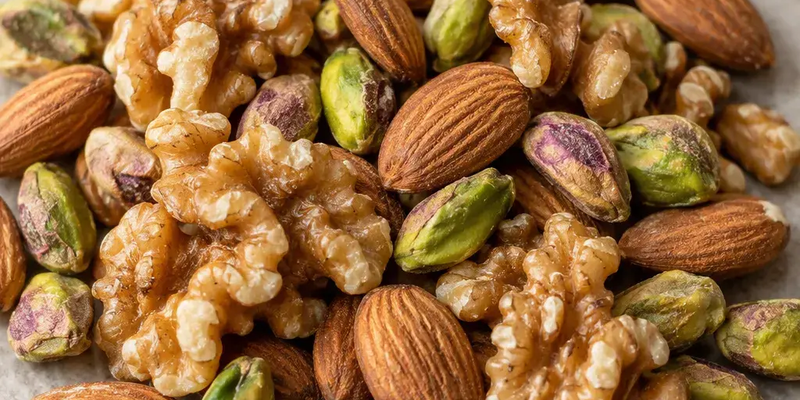
California’s three big tree nut crops are ending 2026 in better market shape than they started it, but for different reasons. Walnuts have a short crop and almost nothing left in storage. Pistachios lost about half their crop to spring heat, yet demand is still strong. Almonds are coming in light while export buyers, led by India, are taking more than they did a year ago.
The shared problem is cost. Water, labor, fuel and financing remain expensive, so improving prices do not automatically mean a profitable year. Here is where each crop stands as growers plan for 2027.
| Crop | 2026 crop estimate | 2025 crop | Market signal |
| Almonds | 2.7 billion lb (USDA forecast); likely lower | about 2.7 billion lb | Exports up 17% season to date; October flat |
| Pistachios | about 800 million lb (ACP, August) | record of about 1.6 billion lb | September shipments up 40%, exports up 64% |
| Walnuts | 680,000 tons (USDA) | 809,000 tons | Industry entered season net short |
Almonds: a lighter crop meets a busy export market
Almonds head into 2027 with a crop that looks smaller than forecast and export buyers taking more California almonds than they did a year ago. For growers who have spent several years selling near or below cost, that is an encouraging combination, even if the October numbers show the early-season rush cooling off.
The only official estimate this year came in May, when USDA’s 2026 California Almond Forecast put the crop at 2.7 billion pounds. That is about 1 percent below 2025, with yields holding at 1,940 pounds per acre. The forecast was based on a survey of roughly 500 growers. It will not be updated, because the Almond Board stopped funding USDA’s in-orchard Objective Measurement Report after the 2025 season.
That leaves handler receipts and grower reports as the best gauge of the real crop, and they point lower. In its October market update, Los Banos handler RPAC said harvest was essentially finished and kernel sizes were running well below recent years. It said yields point to a crop under both the 2025 total and the 2.7-billion-pound estimate. Inedible levels averaged a manageable 2.3 percent, though Carmel-type varieties yielded more weakly than last season.
Handler receipts so far are consistent with that. The Almond Board’s October 2026 Position Report, released Nov. 12 and posted on the board’s position reports page, shows 1.90 billion pounds received through Oct. 31, up 11.7 percent from the same point last year. That lead has narrowed sharply from 22.5 percent a month earlier, a sign that the early start, not a bigger crop, drove the September jump. Handlers would need roughly another 800 million pounds to reach the 2.7-billion-pound forecast. Last year’s receipts ran late because wet weather slowed hulling and shelling in October and November, according to a CMB market report. This year’s harvest ran early, so less of the crop is likely still waiting to be delivered.
With later varieties now in, Nonpareil’s share of receipts has dropped to about 41 percent, while Independence holds about 19 percent and Monterey has climbed to about 17 percent. The overall reject rate remains low at 2.32 percent. The southern San Joaquin Valley has supplied nearly half of all receipts, with Fresno County alone at about 19 percent.
Exports are carrying the market
Exports are still the engine, but the pace is leveling off. Handlers shipped 250.6 million pounds in October, essentially flat with a year earlier (up 0.6 percent). That follows gains of about 20 percent in August and 18 percent in September. October exports were 202.7 million pounds, up less than 1 percent, and domestic shipments were 48.0 million pounds, also flat.
For the season to date, the gains from the first two months still show. Exports total 535.1 million pounds, up 16.8 percent, while domestic shipments are down 5.5 percent at 138.2 million pounds. Exports make up 79 percent of all shipments, compared with 76 percent at this point last year.
India is still the standout. It took 52.3 million pounds in October, up from 28.3 million a year ago, and season-to-date shipments there reached 163 million pounds, up 124 percent. Nearly all of it moved as inshell, which helped inshell exports nearly double to 185.4 million pounds. Pakistan is up about 360 percent to 29 million pounds. China and Hong Kong are up 50 percent, Saudi Arabia 72 percent, South Korea 34 percent, Japan 23 percent and Türkiye 13 percent.
The weak spots are getting harder to ignore. Season-to-date shipments to Spain are down 31 percent, the United Arab Emirates down 29 percent, Vietnam down 22 percent and Morocco down 61 percent. Europe as a whole is down 13 percent, and the Middle East and Africa are down 19 percent. Right now, almonds depend heavily on India and the rest of Asia to offset softer demand elsewhere.
The caution flag from September has not gone away. Total commitments, meaning almonds sold but not yet shipped, stood at 526.2 million pounds on Oct. 31, down 6.3 percent from a year ago. Export commitments, which had been slightly ahead of last year in September, are now down 6.2 percent, and domestic commitments are down 6.4 percent. Uncommitted inventory grew to about 1.13 billion pounds, 15 percent above last year. That gap is narrower than September’s 28.5 percent as receipts normalize, but new sales will need to pick up for the industry to work through supply without pressure on prices. In its October market update, Los Banos handler RPAC described buyers stepping back briefly and then returning as prices eased, which suggests price is still what is moving volume.
Fewer acres, still-high costs
The orchard base keeps shrinking. Land IQ’s 2026 initial acreage estimate counted 1,385,870 bearing acres, down 15,227 from the year before. Removals, abandoned blocks and tight water supplies on the west side of the San Joaquin Valley are all part of that story.
Better prices do not erase the cost side. Water, labor, fuel, fertilizer and pest control remain expensive. Smaller kernels also mean fewer pounds per acre to spread those costs over. For many operations, 2026 is a year to rebuild balance sheets rather than expand.
Next up: The Almond Board’s November position report, due in mid-December, will show whether October’s flat shipments were a pause or the start of a slower stretch, and whether new sales are catching up to supply.
Pistachios: a heat-damaged off year with demand to spare
Pistachio growers expected a smaller crop in 2026. Nobody expected it to be this small. Pistachios bear heavily one year and lightly the next, and 2026 was always going to be a light year after 2025’s record harvest of about 1.57 billion pounds, as reported in USDA’s March 2026 Fruit and Tree Nuts Outlook.
Then came March. An early bloom ran into a stretch of record heat, and temperatures above 85°F hit much of the main growing region, reaching close to 100°F in places. In August, Administrative Committee for Pistachios Executive Director Stephen Vasquez told FreshFruitPortal.com that the crop forecast had dropped to roughly 800 million pounds, about half of last year. Some orchards were seeing blank-nut rates as high as 80 percent, against a normal range of 15 to 20 percent. Final production numbers are expected in early January.
The new crop year opened with a shipping surge
Buyers did not wait to see the final crop size. The Administrative Committee for Pistachios September 2026 inventory and shipment report, released Oct. 15, shows handlers shipped 88.4 million pounds in the first month of the 2026/27 crop year. That is up about 40 percent from September 2025 and the strongest September of the past four years.
Exports drove the jump. Overseas shipments reached 69.1 million pounds, up about 64 percent from a year earlier, while domestic shipments slipped about 8 percent to 19.3 million pounds. Asia more than doubled to 28.9 million pounds, led by Vietnam at 16.1 million pounds, roughly triple last September. India jumped from under 400,000 pounds to 5.4 million. Europe climbed to 25.8 million pounds, with Germany alone taking 9.9 million, and shipments to Türkiye more than quadrupled to 4 million pounds. China showed a small net negative for the month, which typically reflects returns or reporting adjustments rather than new sales.
On the supply side, the industry started the year with about 167 million pounds of carryover from the record 2025 crop. Handlers had received 645.8 million pounds of 2026 nuts by Sept. 30, though harvest receipts were still coming in, so that figure is not the final crop. Estimated marketable inventory stood at about 658 million pounds at the end of September. For context, the industry shipped roughly 1.14 billion pounds over the full 2025/26 year, which shows how quickly that inventory could be committed if the current export pace holds.
Competitors are not filling the gap. Iran and Türkiye, the other major producers, are also dealing with water and weather problems. Vasquez’s advice to buyers was blunt: contact processors early, because supply will be tight. For growers with a decent set, that points to firm prices, though fewer pounds per acre will limit how much of that shows up in the bottom line.
Planting has slowed sharply
The industry’s long expansion is cooling. ACP figures cited in the same interview show new plantings dropped from 30,000 to 33,000 acres a year between 2012 and 2022 to about 7,000 acres in 2025. High orchard establishment costs are the main reason. Still, roughly 520,000 acres were already bearing in 2025, and orchards planted five to six years ago keep coming into production, so total output is still headed higher over time.
The open question is 2027. An “on” year should mean a big rebound, but growers and researchers are still studying how this spring’s heat stress could affect next year’s set. The California Pistachio Research Board has surveyed growers to find management practices that might reduce losses in future heat events.
Walnuts: a smaller crop and an empty warehouse
After several years of prices that rarely covered costs, walnut growers finally have supply working in their favor. USDA’s 2026 California Walnut Objective Measurement Report, released Oct. 1, forecasts 680,000 tons. That is 16 percent below last year’s 809,000 tons, on about 371,000 producing acres.
The drop comes from the trees, not the acreage. Field crews sampled roughly 1,500 trees across 749 orchards this summer and counted an average of 796 nuts per tree, down about 18 percent from 2025. According to a FreshPlaza summary of the report, Chandler nut set fell more than 19 percent and Tulare fell 25 percent.
Growers should treat the forecast as a starting point. The same survey called for 710,000 tons in 2025, and the final crop came in roughly 13 percent higher, as the Hanford Sentinel noted. Final handler receipts will settle the question.
Last year’s crop is gone
The bigger story may be what is not in storage. California Walnut Board figures showed the industry about 13,200 tons net short as of Aug. 31, meaning shipments and committed sales had outrun available supply, per FreshPlaza. Starting a season with almost no carryover, plus a smaller crop, sets up the best chance for a price recovery in years.
That tight position came with help. USDA bought $45 million in California walnuts in August to support demand for last year’s near-record crop, as the Hanford Sentinel reported.
Acreage is flat, and new planting has nearly stopped
The orchard base is no longer shrinking fast, but it is not growing either. Land IQ’s 2026 final standing acreage report, done for the California Walnut Board and released Oct. 1, puts producing bearing acreage at 370,906. That is almost identical to last year’s 370,963. Total standing acreage is 388,336, including young trees and orchards that are stressed or abandoned.
Removals slowed this year. Growers pulled 6,990 acres between Sept. 1, 2025 and July 15, 2026, compared with 10,114 the year before. The removed orchards averaged 28 years old, so growers are mostly clearing out tired, aging blocks. About 7,200 acres planted in 2022 came into bearing this year and roughly offset those losses.
The bigger signal is what comes next. Land IQ estimates just 7,800 non-bearing acres statewide, down from 14,100 in 2025. Only about 1 percent of walnut orchards are four years old or younger, while a quarter are more than 25 years old. With so little young acreage coming up behind them, bearing acres are likely to drift lower in the next few years as older orchards come out.
Land IQ also flagged 9,630 acres as likely abandoned and excluded them from producing acreage. Lake County alone accounts for more than 3,100 of those acres. Another 7,716 acres are classified as stressed, meaning they are still producing but at reduced yield potential. San Joaquin, Butte and Glenn counties remain the largest walnut-growing counties, with about 65,000, 51,000 and 39,000 standing acres respectively.
Europe opens wider
Trade news is also working in walnuts’ favor. On July 1, the European Union began allowing up to 500,000 metric tons of U.S. tree nuts to enter duty-free each year, a quota scheduled to run through 2029. The quota covers walnuts, almonds and pistachios, along with other tree nuts. The California Walnut Commission told Agri-Pulse that Europe is the walnut industry’s largest export market, taking about 30 percent of global supply.
Competition remains the main threat. China and Chile remain major walnut exporters competing with California for the same overseas buyers. California’s best defense is quality and reliability, and a smaller, clean crop helps on both counts.
The pressures all three crops share
Different markets, same farm costs. Whether a grower runs almonds, pistachios or walnuts, the same four issues keep coming up.
Weather is getting more extreme. This year’s growing season began with a record-hot March and early snowmelt. That heat did the most damage in pistachios, but it also sped up bloom and harvest timing across the nut crops. Now the outlook has turned wet. The National Weather Service forecast a stretch of heavy rain for much of Northern and Central California starting around Nov. 10, with heavy Sierra snow possible, according to KTLA. That is welcome for soil moisture and reservoirs, but it can complicate late field work and orchard floor cleanup.
Water is better than feared, but not secure. The State Water Project allocation climbed to 45 percent by May, up from a 10 percent start. Lake Oroville was full by spring, according to the Department of Water Resources. Still, the snowpack melted early, groundwater rules under SGMA continue to limit pumping, and west-side growers depend heavily on surface deliveries that can swing widely year to year.
Labor is uncertain. A surge in immigration enforcement across the Central Valley this fall kept some farmworkers home and slowed harvest crews, Ag Alert reported. Hulling, sorting and orchard work depend on experienced hands, and growers say those workers are hard to replace on short notice. Rising labor costs and a shrinking workforce are also pushing interest in automation, though fully driverless equipment still faces regulatory limits in California.
Inputs stay expensive. Fuel, fertilizer, pest control, interest and processing costs have not come down much, even as prices improve. A better price only helps if yields hold up, and for many almond and pistachio growers, 2026 yields did not.
What to watch heading into 2027
- December almond position report. After a flat October, the November numbers will show whether India-led export demand holds, whether commitments recover, and how much of the crop is still left to deliver.
- Final pistachio receipts, expected in early January. These will confirm how deep the heat losses went. Before then, ACP’s October shipment report, expected around mid-November, will show whether the September export surge carried into a second month. Watch for early signs of how big the 2027 on-year crop could be.
- Walnut handler receipts. Last year’s USDA forecast came in well under the final crop. This year’s 680,000-ton number could prove high or low, and price direction depends on it.
- Winter storms and the first 2027 water allocation. DWR’s initial State Water Project allocation is due by Dec. 1 each year, per the department. A wet November would give it a better starting point.
- The EU duty-free quota. The 500,000-metric-ton quota is shared across all U.S. tree nuts on a first-come, first-served basis, so how fast it fills will matter to exporters.
- Labor availability heading into winter pruning and spring orchard work.
The short version: pistachio growers have prices but fewer nuts, walnut growers finally have a tight market working for them, and almond growers have strong export demand but need to see it continue. Across all three, managing costs per pound remains the difference between a profitable year and another tough one.