
Every Lawmaker Voted Yes On SB 872. Newsom Vetoed It Anyway, and California’s Sinking Canals Just Lost Their Rescue Plan
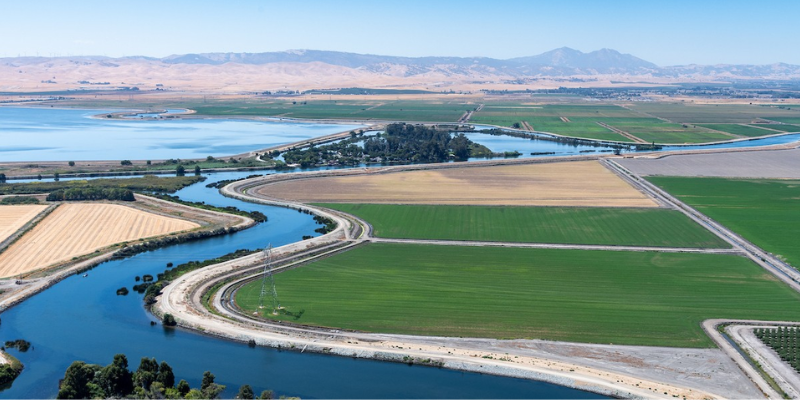
SB 872 would have created a dedicated fund to repair crumbling Delta levees and canals damaged by sinking land. It passed the Legislature without a single “no” vote. The veto was buried in a late-night Sunday bill list.
The bill had something California water fights almost never have: farm interests, Southern California water agencies, Delta advocates and environmentalists all on the same side. It still didn’t become law.
Gov. Gavin Newsom vetoed Senate Bill 872, Sen. Jerry McNerney’s (D-Pleasanton) measure to create the Delta Levees and Canal Subsidence Fund. The decision came in the legislative update the governor’s office posted Sunday night. That update listed more than 40 vetoes alongside a long list of newly signed bills, and SB 872 got no press release of its own.
The governor’s office posted a veto message with the decision.
In his veto message, Newsom said the state is already paying for this work. He pointed to this year’s budget, which he negotiated with the Legislature. It includes $68 million to address subsidence on the state’s aqueducts and canals and $75 million for Delta levee repairs and flood protection. It also gives $20.2 million to the Sacramento-San Joaquin Delta Conservancy for climate resilience work and $7.9 million for mitigation costs tied to Delta levee projects.
The governor’s main objection was that SB 872 would set rules for spending money from a fund that received nothing in this year’s budget. “While well-intentioned, this bill is unnecessary,” he wrote.
What SB 872 would have done
The bill would have set up a new fund in the State Treasury. According to the bill text, the fund could take state money from bond funds, the General Fund, and the Greenhouse Gas Reduction Fund. The Secretary of the Natural Resources Agency would have handed that money out once lawmakers appropriated it.
The amounts at stake were large. An earlier version of the bill would have set aside $150 million a year for the Department of Water Resources to restore the original carrying capacity of state canals damaged by subsidence. It would have sent another $150 million a year to the Sacramento-San Joaquin Delta Conservancy for levee repairs, every year from 2026-27 through 2046-47.
The bill also would have required the Delta Conservancy to write a five-year spending plan for improving existing Delta levees and post it publicly. At least 15% of the Delta project money would have gone to levee projects chosen by a working group.
Why sinking land is a statewide problem
The problem is decades of overpumping. The bill’s findings note that before the Sustainable Groundwater Management Act passed, groundwater pumping and other causes led to significant land subsidence in the San Joaquin Valley. When the ground sinks, the canals built on it sink too, and they can carry less water.
When McNerney presented the bill to a Senate committee, supporters said the subsidence and levee problems threaten water deliveries to 27 million Californians and put about $22 billion in state assets at risk. McNerney warned that if subsidence continues, the aqueducts may no longer be able to carry water to Southern California.
The Delta has a second weak point. At an Assembly committee hearing in June, a witness testified that some Delta levees date back to the 1800s and are no longer very reliable.
A rare moment of unity
In California water politics, getting everyone to agree is almost unheard of. SB 872 managed it.
Legislative records show the bill passed the Senate 39-0 in May and the Assembly 77-0 in August. The Senate then approved the final version 37-0.
Environmental groups and the State Water Contractors, who have often fought over water use, both supported the bill, according to McNerney’s office. So did the San Joaquin Area Flood Control Agency and Restore the Delta. The Southern California Water Coalition urged the governor to sign it, and even the City of Beverly Hills sent a letter of support.
After the final vote, McNerney called the unanimous passage proof that “California is ready to finally end its water wars.”
What it means for the Valley
For San Joaquin Valley farmers, subsidence is a daily concern, not a theory.
One detail matters for Valley readers. In committee, Sen. Valadares asked why the bill covered only state-owned canals. McNerney answered that the state is generally responsible for the State Water Project and the federal government for the Central Valley Project, so SB 872 aimed state money at the state’s share. That means federal canals serving much of the east side of the Valley would have been outside the bill even if it had become law.
The veto also comes as the state tightens its oversight of groundwater pumping. Growers in the Tule and Tulare Lake subbasins, which the State Water Board put on probation in 2024, had to report their groundwater pumping to state regulators for the first time by May 1, 2026. So the state is pressing farmers harder on pumping while turning down a dedicated fund to repair damage that pumping already did.
What happens next
The Legislature can override a veto with a two-thirds vote in each house, but California lawmakers haven’t done that since 1979. The two-year session is ending, so the most likely path is for McNerney or another lawmaker to bring the idea back in 2027.
For now, the canals are still sinking and the Delta levees are still old. The one bill that nearly everyone agreed on won’t be funding repairs.