
China Rejected Argentine Beef Over a Banned Antibiotic. The U.S. Is Opening Its Doors Wider. Here’s Why Buying Local Still Wins.
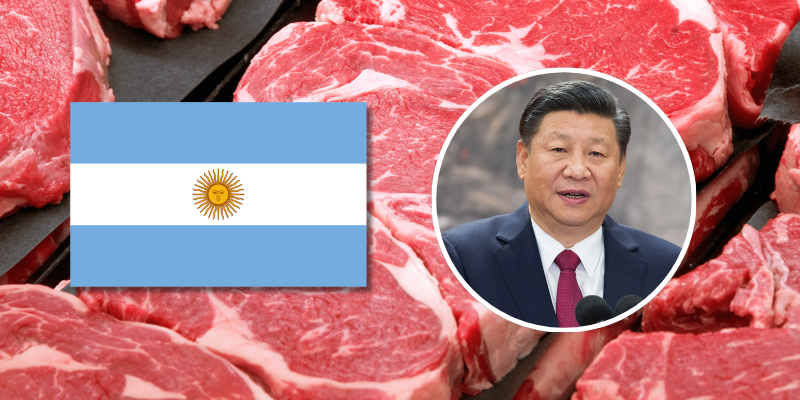
A single container of beef has put a spotlight on a question every shopper deserves to ask: where did my beef come from, and what’s in it? In early 2026, Chinese customs officials rejected a shipment of Argentine beef after laboratory tests detected a banned antibiotic. Separately, the United States has moved to import significantly more foreign beef to ease record prices. The two events are not the same story, the rejected shipment was turned back, not rerouted here, but together they raise a fair question about how much we really know about the beef on our shelves. Here’s what the official record actually shows, and why supporting your local butcher and rancher is the clearest answer to the uncertainty.
What was detected, and why it’s banned
The antibiotic at the center of the case is chloramphenicol. In the United States, it appears on the U.S. Food and Drug Administration’s short list of drugs prohibited from extralabel use in food-producing animals under 21 CFR 530.41, the very first substance named on that list. It is not a gray area; it is flatly prohibited.
The reason is a rare but serious health risk. According to the FDA’s Import Alert 16-127, chloramphenicol has been linked to idiosyncratic aplastic anemia, a potentially fatal blood disorder in which the bone marrow stops producing enough blood cells. Because that reaction is not dose-related, the FDA states that a safe level of exposure has yet to be determined. That is why regulators treat any detectable residue as unacceptable rather than setting a tolerance.
The U.S. is importing more beef, here’s the paper trail
The reason the story resonated in the U.S. is timing. On February 6, 2026, the President signed Proclamation 11010, “Ensuring Affordable Beef for the American Consumer”. According to the accompanying White House fact sheet, it permits an additional 80,000 metric tons of lean beef trimmings per year from Argentina to enter tariff-free, in four quarterly tranches of 20,000 metric tons each. U.S. Customs and Border Protection published the quota bulletin implementing the first Argentine tranche.
In late August 2026, the administration went further, issuing a second proclamation, “Further Ensuring Affordable Beef for the American Consumer,” which increased the aggregate in-quota quantity for lean beef trimmings by an additional 300,000 metric tons for calendar year 2026. Unlike the February action, this larger volume was not allocated to Argentina specifically, the proclamation directs it to the general “other countries or areas” category, and as of publication the administration had not publicly named which countries would fill it.
The driver is a genuine supply squeeze. USDA’s National Agricultural Statistics Service reported that, as of January 1, 2026, the U.S. cattle inventory totaled 86.2 million head, with the beef cow herd at 27.6 million head, the smallest since 1961. Imported lean trimmings get blended into domestic ground beef to stretch supply and hold prices down.
The real blind spot: the label
Here is the part that matters most for your kitchen. Since 2015, you often can’t tell where the beef in a package came from. USDA stopped enforcing country-of-origin labeling (COOL) for beef and pork on December 18, 2015, after Congress repealed the requirement; the agency later formalized the removal in a final rule effective March 2, 2016. That means blended ground beef does not have to disclose the country where its trimmings originated. The rejected shipment overseas was turned back, but the labeling gap at home is permanent, and it applies to every package on the shelf.
Opposition and oversight
The import expansion has drawn bipartisan pushback, though it is worth being precise about what has and hasn’t happened. No state or federal ban on Argentine or imported beef has been enacted. What has happened is scrutiny. On April 30, 2026, the U.S. House passed H.R. 7567, the Farm, Food, and National Security Act of 2026, which includes a section expressing congressional concern over Argentine beef imports and directing federal agencies to report on their effect on U.S. ranchers and cattle markets. It is a statement of concern and a call for a report, not a prohibition.
Food-safety enforcement has also stayed active. In August 2026, USDA’s Food Safety and Inspection Service announced a recall of roughly 29,628 pounds of raw Argentine beef distributed in Texas and Florida, because the product had entered the country without the required federal reinspection. Notably, that recall was a procedural failure, not a confirmed contamination event, and not connected to the chloramphenicol case overseas. It is a reminder that the inspection system catches paperwork gaps, but also that those gaps happen.
What you can do as a shopper
You don’t have to give up beef to shop with confidence. A few habits go a long way:
- Favor third-party-verified claims over marketing phrases. A slogan on the front of a package is not the same as an independently verified standard.
- Ask where the beef was born, raised, and processed. A local butcher can usually answer; a blended supermarket package usually cannot.
- Choose whole cuts, or have ground beef ground from a single identified source, when you want the clearest traceability.
The case for buying local
This is where a food-safety story becomes an opportunity for our community. When you buy from a local butcher, a nearby ranch, or a farmers-market meat vendor, you get something the global commodity chain struggles to offer: a name, a farm, and a straight answer. Local producers can tell you how their animals were raised, what they were fed, and who processed the meat. That transparency is the single best antidote to the labeling blind spot at the heart of this story.
Buying local does more than protect your kitchen. It keeps dollars in the community and supports the family operations working to rebuild the herd at a time when the national cattle supply sits at its lowest in decades. Every purchase from a local farmer shortens the distance between the pasture and your plate and it’s a vote for a food system where you can actually trace what you eat, no customs lab required.
So the next time a headline makes you second-guess what’s in your cart, remember there’s a simpler path down the road: your local butcher, your neighbor’s ranch, your farmers market. Support the people who can look you in the eye and tell you exactly where your dinner came from.