
Screwworm Scare Meets Border Reopening: Douglas Port Reopens Today Amid Fresh Sonora Case
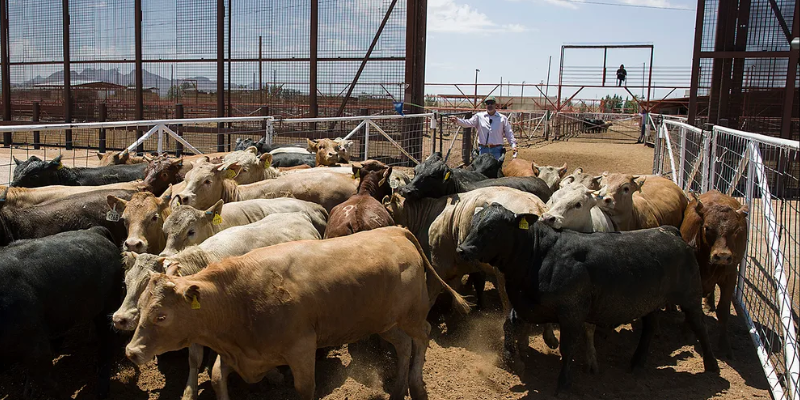
The U.S.-Mexico cattle border began reopening today, but a newly confirmed New World screwworm case just south of Arizona has put the timing under a cloud and split the ranching community over whether the door should be opening at all.
As of today, August 24, USDA reopened the Douglas, Arizona port, which borders the Mexican state of Sonora, to livestock trade, the first step in a phased reopening after more than a year of closures tied to the flesh-eating parasite. Per USDA’s July announcement, the agency is simultaneously preparing the operational steps for reopening the Santa Teresa and Columbus ports in New Mexico, and says every animal entering through these ports will undergo a full USDA inspection.
The complication: Sonora just got its first case
Officials specifically chose Sonora to reopen the border because it was considered one of the lowest-risk Mexican states, strong, well-established inspection programs and geographic distance from southern Mexico, where most cases are concentrated. Then, on August 19, Governor Alfonso Durazo announced Sonora’s first confirmed screwworm case, in a cow in the southern part of the state, roughly 292 miles from the U.S. border and about 10 miles from the Chihuahua line. Sonora activated emergency surveillance and containment protocols, and its agriculture ministry reported releasing 360,000 sterile flies around the site.
Despite the detection, USDA held to its schedule. As of the agency’s current status page, the closest active case to the Douglas port was about 325 miles away, detected July 22. The department’s Rapid Response account said it had “no plans to change the Douglas, AZ port” timeline, citing its layered response approach, though it has stressed the reopening schedule is flexible and can be paused if authorities identify increased risk in Sonora or Chihuahua. As one account noted, the sequence matters: the port reopened five days after Sonora’s case was confirmed and four days after USDA said the detection wouldn’t change the plan.
How we got here
The border has been closed on and off since screwworm began spreading northward through Mexico. The U.S. first restricted Mexican cattle shipments in November 2024, lifted the ban in February 2025 under new protocols, then re-suspended trade in May 2025 over what officials called an unacceptable northward advancement of the pest. A brief phased reopening attempted in July 2025 was halted almost immediately after a new case was detected. Mexico currently reports 1,969 active cases across 30 of its 32 states, less than half the number reported a year ago, which authorities say shows containment progress even as they acknowledge full eradication will take time.
The parasite has already crossed into the U.S. The first domestic case was confirmed in a calf in Zavala County, Texas, on June 3, 2026, with additional detections following in Texas counties including Tom Green. New World screwworm larvae feed on the living tissue of warm-blooded animals and can cause severe injury or death if untreated; USDA views the pest as a major threat to the nation’s roughly $113 billion cattle industry.
The fight-back: sterile flies
The core eradication tool is the sterile insect technique, releasing sterile male flies so that wild females, which typically mate only once, produce no viable offspring, collapsing the population over time. It’s the same method that eradicated screwworm from the U.S. in 1966.
USDA is currently leaning on the Panama-based COPEG facility, which produces about 100 million sterile flies per week, supplemented by a modernized facility in Metapa, Mexico. Domestically, USDA completed a sterile fly dispersal facility at Moore Air Base in Edinburg, Texas in February and broke ground in April on a new $750 million sterile fly production facility in Edinburg, designed to produce up to 300 million flies per week and slated to open in 2027. Ground and aerial dispersal operations are already underway in affected Texas areas.
Why not all ranchers want the border open
Here’s the tension that ties this story to the broader beef debate: many U.S. ranchers don’t want the border reopened, and screwworm is only part of the reason.
With the domestic herd at historic lows, cattle prices have been at historic highs and for producers who don’t depend on Mexican feeder cattle, those prices have meant real profits after years of break-even. As R-CALF USA CEO Bill Bullard told CNN, screwworm is one piece of a larger crisis, a growing dependence on foreign cattle and beef that he calls a threat to national security, arguing the country has lost roughly half its cattle producers in a generation.
Economists, meanwhile, temper expectations that reopening will move grocery prices much. Mexico has traditionally supplied about 1.1 million head, or roughly 3 percent of U.S. cattle supply, and because the reopening is phased, it will take months for those imports to return to normal levels. As agricultural economist Derrell Peel put it, there’s little reason to expect a measurable near-term impact on cattle or beef prices.
The bottom line for growers
Today’s reopening is real but narrow, one port, phased, and immediately shadowed by a fresh case in the very state chosen for its low risk. For producers, the practical watch items are whether USDA holds the line on further reopenings if cases keep advancing, how fast domestic sterile-fly capacity comes online, and whether renewed Mexican imports combine with the administration’s separate beef-import push to pressure the strong prices ranchers have finally been enjoying.
Screwworm developments are moving quickly; check screwworm.gov for the current situation map and status.