
A Week of Chaos in Michoacán Just Showed California Avocado Growers Exactly What They’re Up Against
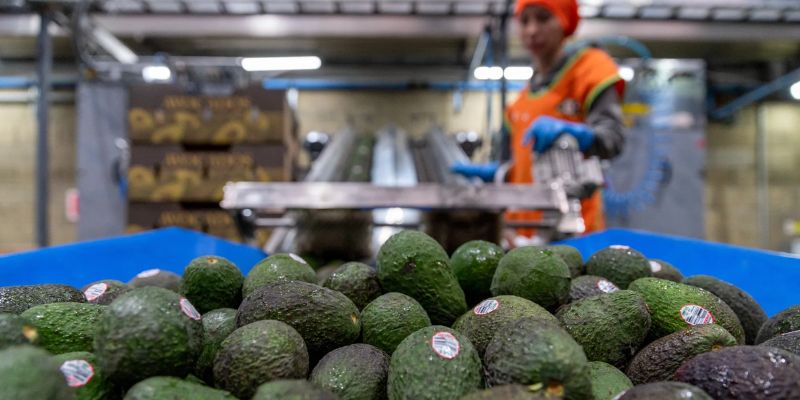
For about a week starting in early August, the fruit that stocks nearly every U.S. grocery produce section almost stopped moving across the border. On August 5, the U.S. Embassy in Mexico issued a security alert announcing that “U.S. government activities in Michoacan State have been suspended” following “a threat against American interests”, a suspension that included the USDA inspections required for avocado exports to cross the border. The U.S. State Department’s travel advisory already designated Michoacán a Level 4 “Do Not Travel” area, its highest risk category.
Full operations resumed eight days later. The Embassy’s follow-up alert, dated August 13, states plainly: “The U.S. government will resume activities throughout Michoacan State on August 13”, after Mexican President Claudia Sheinbaum’s administration moved additional Army and National Guard personnel into the region to protect packing facilities and farming communities. Notably, even with operations restored, the Embassy alert reiterates that Michoacán remains a Level 4 “Do Not Travel” area, the resumption is operational, not a sign the underlying security situation has improved.
It was a brief scare in the broader supply chain. But for California’s avocado industry, it was also a preview of exactly the kind of instability they’ve spent this year warning about and a fresh argument for the trade protections they’ve been asking Washington for since spring.
Why Michoacán Matters So Much
According to USDA’s Foreign Agricultural Service, Michoacán accounts for roughly 68% of all Mexican avocado production, far ahead of Jalisco (12%) and the State of Mexico (5%), and Michoacán and Jalisco are the only two Mexican states currently certified to export avocados to the U.S. at all. Mexico supplies about 88% of total U.S. avocado imports, and the U.S. buys roughly 80% of everything Mexico exports. Put simply: when Michoacán’s export pipeline stops, there’s no real substitute standing by.
California’s Case: This Is the Moment
The disruption landed in the middle of a monthslong push by the California Avocado Commission for new trade protections. CAC President Ken Melban has been calling for a seasonal tariff-rate quota on Mexican avocados, a system that would let a set volume enter the U.S. at standard tariff rates between March and September, with anything above that quota facing higher tariffs, plus full reinstatement of rigorous USDA inspections before Mexican fruit crosses the border.
The Commission’s argument rests on more than the security disruption. In its own statement, CAC points to a 35% surge in Mexican avocado shipments to the U.S. in the first four months of 2026, squeezing California growers on price and volume even as the state’s own production winds down for the season.
Melban’s language, in the Commission’s own words, has been blunt: “Our growers have no hope of surviving when the ordinary rules of the market are replaced by the Wild Wild West,” he said, framing the ask as consistent with the current administration’s posture toward Mexican cartels: “The Trump administration is right to protect American personnel and confront the cartels.”
Mexico’s grower-exporter association, APEAM, has pushed back on the broader framing. In an official communique, the association addressed the security situation directly, positioning Mexico’s avocado sector as a stable, reliable trading partner and calling for continued coordination with U.S. authorities to keep export operations running smoothly.
Where This Fits in the Bigger Trade Picture
The timing is notable given what else is happening at the federal level. The Office of the U.S. Trade Representative has been holding bilateral negotiating rounds with Mexico this year as part of the first joint review of the USMCA, the exact forum where a seasonal tariff-rate quota on avocados would need to be negotiated. A real-world disruption in Michoacán, however brief, gives California’s case a concrete example to point to rather than a hypothetical one.
What It Means Going Forward
Nothing about tariff-rate quotas has been decided, the Michoacán episode is a data point in an ongoing argument, not a resolution to it. But with California and Peru both winding down their production windows for the year, and Michoacán supplying such an outsized share of the fruit Americans eat, each disruption in the region adds weight to the argument that the current trade structure leaves American growers exposed to risks entirely outside their control.
For California growers watching from the sidelines of a supply chain increasingly concentrated in a single Mexican state, the message from the last two weeks is simple: this is unlikely to be the last time.