
Bayer Seeks Steep Duties on Chinese Glyphosate, Drawing Fierce Backlash From Farm Groups
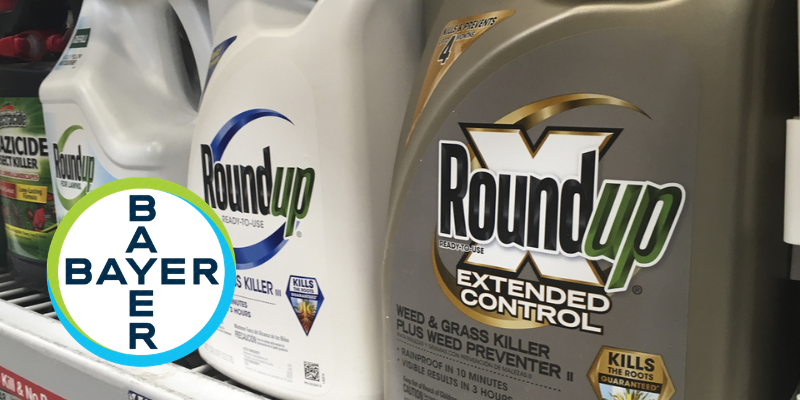
Fresh off its Supreme Court victory, the company’s trade petition has farm organizations accusing it of betrayal and warning of higher input costs at the worst possible time.
Just five days after farm groups helped Bayer secure a landmark U.S. Supreme Court win protecting glyphosate from state failure-to-warn lawsuits, the company turned around and filed a trade petition that those same groups say could drive up the cost of the herbicide for American farmers.
On June 30, Bayer subsidiary Monsanto Company, together with its affiliate Ruveon LLC, filed petitions with the U.S. Department of Commerce and the U.S. International Trade Commission seeking antidumping and countervailing duties on glyphosate imported from China. The petition alleges that Chinese producers, aided by government subsidies, have been selling glyphosate salts and technical material into the U.S. market at less than fair value, and it asks for antidumping duties ranging from 68.9% to as high as 446.47%.
In a statement, the company said the filing was necessary to address predatory trade practices and subsidized imports, adding that “the domestic glyphosate business as it stands today is not sustainable.”
The only domestic producer
Bayer/Monsanto is the sole remaining U.S. manufacturer of glyphosate, supplying roughly 60% of what is sold domestically. Its production chain runs from elemental phosphorus mining in Soda Springs, Idaho, through formulation operations in Muscatine, Iowa, and Luling, Louisiana. The remainder of the U.S. supply comes from Chinese manufacturers, whose material is typically imported and converted by U.S. formulators into generic herbicide products sold through ag retail channels.
According to the petition, Chinese producers ramped up a coordinated, subsidized export push between 2023 and 2025 that caused U.S. glyphosate prices, sales, and profits to fall sharply even as demand grew. The filing points to China’s continued expansion of production capacity, including Sichuan Hebang Biotechnology’s construction of the world’s largest glyphosate plant and an $800 million investment in Indonesia. Monsanto says the price pressure has forced job cuts at its U.S. operations, though some figures on lost market share and employment are redacted in the public version of the petition.
The petition also comes on the heels of a corporate restructuring. Bayer recently consolidated its U.S. glyphosate resources and operations into Ruveon, a new St. Louis-based entity that remains within the Bayer group. In a letter to customers, Ruveon business development lead Dan Rongen described the new company as the leading domestic producer of glyphosate-based solutions and positioned it as the successor to more than fifty years of the Roundup™ legacy. That entity is now the co-petitioner in the trade case.
Farm groups cry foul
The reaction from commodity organizations was swift and unusually pointed, in part because of the timing. On June 25, the Supreme Court ruled 7–2 in the Durnell case that the Federal Insecticide, Fungicide, and Rodenticide Act preempts state-law failure-to-warn claims when EPA has made a definitive safety determination, a decision expected to dismiss the bulk of the roughly 180,000 Roundup™ cancer claims Bayer has faced. Farm groups had publicly backed Bayer throughout that fight, arguing that keeping glyphosate on the market was essential to affordable production and no-till practices.
Less than a week later, they found themselves opposing the same company at the ITC.
National Corn Growers Association president Jed Bower, an Ohio farmer, said the petition was no act of partnership, arguing the company is acting purely for the benefit of its shareholders at the expense of American farmers during one of the most difficult ag economies in decades. The American Soybean Association said it strongly opposes the petition outright, and National Association of Wheat Growers CEO Sam Keiffer urged the ITC to weigh the consequences for farmers, rural economies, and the food system before acting.
Farm organizations point to recent history to make their case. A Texas A&M study found that countervailing duties on imported phosphate fertilizer cost U.S. farmers an estimated $6.9 billion in higher input costs over five years. Corteva won similar duties last year on 2,4-D imports from China and India over grower objections. Notably, Monsanto’s petition landed just one day after President Trump suspended the controversial duties on Moroccan phosphate imports, a reversal farm groups had sought for five years.
What happens next
Farm-economy arguments may carry limited weight in the proceedings themselves. U.S. antidumping and countervailing duty law turns on whether a domestic industry is suffering material injury from unfairly priced or subsidized imports, not on whether downstream users can absorb higher costs. The ITC’s ruling in Corteva’s favor on 2,4-D, despite similar objections from growers, suggests the deck may be procedurally stacked in the petitioner’s favor.
Nothing is decided yet. The ITC has roughly two months to issue a preliminary injury determination, and a final decision from the Commerce Department could take up to a year. In the meantime, importers and formulators who depend on Chinese glyphosate face significant uncertainty heading into the 2027 buying season and farmers are left wondering whether the herbicide they just helped defend in court is about to get more expensive.