
The Big Four Are Locked Out: Why USDA Just Handed Smaller Beef Packers a $500 Million Lifeline
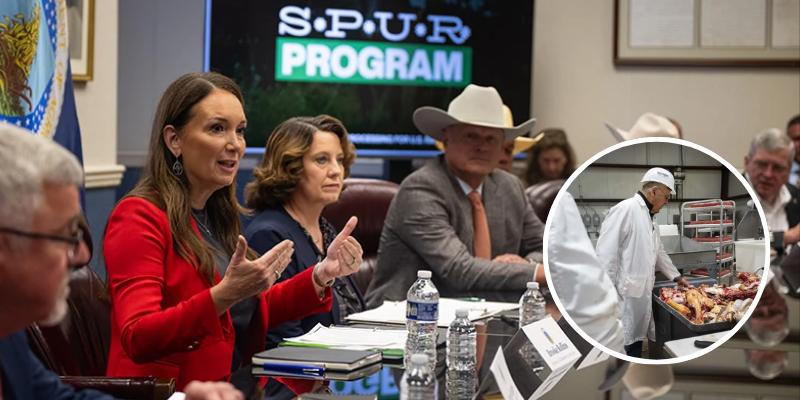
America’s beef supply chain is under more strain than it has seen in generations, and Washington just made a dramatic move to keep it from breaking. Late last month, the U.S. Department of Agriculture announced up to $500 million in payments for small and mid-sized beef processors and pointedly shut the nation’s four dominant meatpacking giants out of the program entirely.
What Is the SPUR Program?
Announced June 30 by Agriculture Secretary Brooke Rollins, the Strengthening Processing for U.S. Ranchers (SPUR) Program will provide temporary financial assistance to independent and regional beef processing plants struggling with the elevated cost of acquiring cattle. Funding comes through the Commodity Credit Corporation and will be administered by the Farm Service Agency.
The goal is straightforward: keep regional slaughter and processing capacity online during a historic cattle shortage, so that when the national herd eventually rebuilds, the infrastructure ranchers depend on is still standing. Announcing the program, Rollins said extraordinary market conditions are placing “significant pressure on our independent and regional beef processors.”
Who Qualifies and Who Doesn’t
Eligibility rules are where SPUR gets interesting. To receive payments, a facility must be a beef processing establishment operating under federal inspection, or inspected under the Talmadge-Aiken Cooperative Inspection Program or the Cooperative Interstate Shipment Program overseen by USDA’s Food Safety and Inspection Service.
Beyond that, eligible plants must be U.S.-owned and cannot be “nationally dominant” in beef processing, defined by USDA as holding a market share at or above that of the fourth-largest processor. In practice, that language excludes the Big Four packers: JBS, Tyson Foods, Cargill and National Beef, which together control roughly 85 percent of the U.S. beef processing market, including two foreign-owned firms.
Notably, there will be no open application window. USDA plans to use existing Food Safety and Inspection Service records to identify qualifying facilities and contact them directly about the application process.
Why Now? The Smallest Cattle Herd in 75 Years
The timing is no accident. According to the USDA National Agricultural Statistics Service, the U.S. cattle herd stood at 86.2 million head on January 1, 2026, with beef cows at just 27.6 million, the smallest inventory in roughly 75 years, and the 2025 calf crop down 2 percent from the year prior.
Fewer market-ready cattle means packers of every size are bidding aggressively for animals while still carrying fixed costs for labor, equipment and food safety compliance. Smaller and regional plants, which lack the procurement leverage and balance-sheet depth of the largest firms, are the most exposed. Even the giants are feeling it: major plant closures and shift reductions have already hit the sector this year.
USDA also pointed to an added threat, the reemergence of New World Screwworm, a parasitic pest monitored by the Animal and Plant Health Inspection Service that poses a serious risk to livestock health.
What It Means for Ranchers
For cattle producers, SPUR functions less like a payout and more like an insurance policy on marketing options. Independent and regional plants provide alternative bids when the largest packers cut shifts or close facilities, and they are the backbone of branded, value-added programs, organic, grass-fed and Product of USA-labeled beef among them. If those plants disappear during the downturn in the cattle cycle, ranchers could be left selling into an even more concentrated market when herd numbers recover.
What It Won’t Do: Lower Beef Prices Overnight
Consumers hoping for relief at the meat counter shouldn’t expect it soon. The USDA Economic Research Service reported beef and veal prices running nearly 13 percent higher year-over-year this spring, with further increases forecast for 2026. Industry voices have been blunt that money for processors doesn’t create more cattle. As Meat Institute President and CEO Julie Anna Potts put it: “We simply need more cattle.”
The real payoff, analysts suggest, is defensive, preventing today’s cattle shortage from becoming tomorrow’s permanent processing-capacity problem.
The Open Questions
Key details remain unsettled, including how USDA will calculate individual payments, whether aid will be tied to slaughter volumes or demonstrated financial stress, per-plant limits, and the timeline for funds to reach facilities. Eligible processors should watch for direct outreach from the Farm Service Agency in the coming weeks, and Ag Center News will continue following the program as those details emerge.