
2.5 Million Acre-Feet: The Water Gap That’s Reshaping San Joaquin Valley Farming Forever
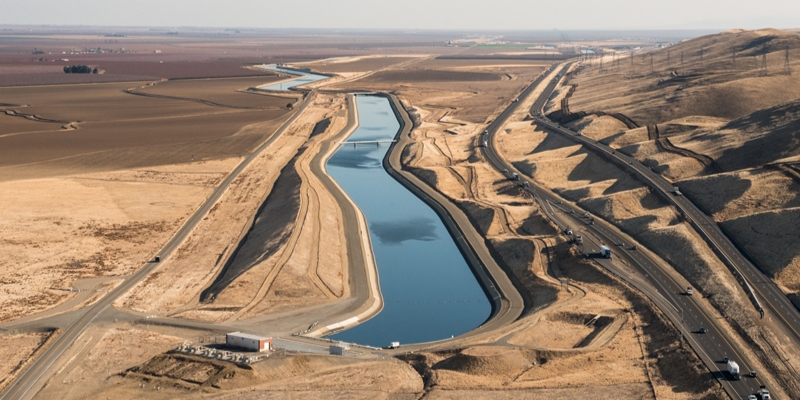
California’s water story is moving fast this spring and for growers in the San Joaquin Valley, the changes hitting right now are significant. From a major State Water Project allocation increase to a landmark summit that brought together state officials, water agencies, and agricultural leaders at Fresno State, the decisions being made this month will shape the valley’s farming future for years to come. Here is a full breakdown of where things stand as of today.
State Water Project Allocation Climbs to 45%
On May 15, the California Department of Water Resources (DWR) announced an increase to the State Water Project (SWP) allocation for 2026, raising it to 45 percent of requested supplies. That is up from 30 percent announced on January 29, and a dramatic increase from the initial 10 percent allocation set on December 1.
The State Water Project serves 27 million Californians and 750,000 acres of farmland across the state, making this allocation number one of the most closely watched figures in California agriculture every season.
What drove the increase? After record heat in March caused early snowmelt and raised concerns, consistent rainstorms throughout April provided critical runoff that allowed DWR to capture more water and meet environmental flow requirements without drawing down stored reserves. Currently, Lake Oroville, the SWP’s largest reservoir, is sitting at 99 percent of capacity.
DWR notes that a final allocation determination is typically made near the end of the season in May or June, so growers should watch for any additional updates in the coming weeks. Historical SWP allocation data is available on the DWR website.
For growers who depend on SWP deliveries, this is meaningful news heading into the summer irrigation season. Having surface water available reduces pressure on groundwater pumping, a connection that is increasingly critical as Sustainable Groundwater Management Act (SGMA) deadlines close in.
The San Joaquin Valley Water Resilience Summit: From Reports to Results
On May 20 and 21, Fresno State hosted the San Joaquin Valley Water Resilience Summit, a two-day convening organized by the California Water Institute and sponsored by DWR. The summit brought together state agency leaders, water district executives, Groundwater Sustainability Agencies (GSAs), county officials, agricultural organizations, and environmental stakeholders, all with one shared goal: turning years of water planning reports into coordinated, on-the-ground action.
Laura Ramos, director of Fresno State’s California Water Institute, set the tone clearly at the outset: “You cannot save groundwater without thinking about surface water. We can’t think of flood management without thinking about recharge. We can’t think about conveyance without thinking about subsidence, land use and long-term investment. And we cannot think about long-term resilience without considering communities, agriculture, ecosystems and economic stability.”
The message was equally direct about timing. What happens in the next five years, Ramos said, will define the valley’s trajectory for decades.
Day one of the summit focused on alignment, reviewing findings from major DWR studies, hearing regional perspectives, and identifying systemwide implications. Day two shifted to commitment, with participants working to identify regional priorities for the 2025 to 2030 window, discussing potential pilot projects, and exploring opportunities for policy coordination and financing.
Consultants presenting the Unified Water Plan for the San Joaquin Valley laid out the hard numbers underlying the valley’s challenge: a 2.5 million acre-foot annual gap driven by groundwater overdraft, regulatory demands, and the accelerating effects of climate change. The Unified Water Plan draws from groundwater sustainability plans, state and federal studies, and the Water Blueprint for the San Joaquin Valley, all coordinated through the DWR planning framework.
That gap is not abstract. It is showing up right now in the form of fallowed farmland, drying domestic wells, and land subsidence that is damaging canals and water infrastructure across the valley.
The Groundwater Reality Underneath the Surface
The summit and the broader push to strengthen surface water deliveries cannot be separated from SGMA, California’s Sustainable Groundwater Management Act. Signed into law in 2014, SGMA requires that critically overdrafted groundwater basins reach sustainability by 2040, meaning groundwater pumping must come into balance with recharge.
For growers in basins already under pumping restrictions, the pressure is real and building. The Westlands Water District, which covers more than 600,000 acres on the west side of the San Joaquin Valley, has an SGMA-approved groundwater sustainability plan that calls for per-acre groundwater allocations to be reduced to just 0.6 acre-feet per acre by 2030, a significant and fast-approaching cutback for growers who rely on groundwater to fill gaps in surface water deliveries.
The downstream effect has been substantial. Where Westlands historically saw approximately 150,000 acres fallowed annually as part of normal land rotation, that number has climbed to roughly 240,000 acres per year since SGMA implementation began, a 60 percent increase in fallowed land within a single district.
The reason the two stories, surface water allocations and groundwater management, are inseparable is straightforward. When surface water deliveries fall short, growers pump more groundwater to compensate, accelerating overdraft and subsidence. When surface water is available, as it is this spring, it relieves that pressure. It is why so many valley water leaders at the Fresno State summit kept returning to the same point: long-term groundwater sustainability depends on reliable surface water. As Westlands stated directly earlier this year, “The best way to protect our groundwater is to make sure we continue to have surface water.”
DWR’s Vision for the San Joaquin Valley: Public Comment Now Open
Ahead of the summit, DWR released a new planning document called the Vision for the San Joaquin Valley, a comprehensive look at how the state intends to address the valley’s interlocking water challenges, including groundwater overdraft, aging conveyance infrastructure, subsidence, flood management pressures, land-use transitions, and community impacts.
DWR Director Karla Nemeth put it plainly: “Decades of severe groundwater overdraft and accelerating climate conditions have put the San Joaquin Valley on an unsustainable path. This vision provides the necessary framework for climate-resilient water management, aligning partners and guiding coordinated action to safeguard communities, agriculture, and ecosystems across the region.”
Critically, the Vision is currently open for public comment through July 21, 2026. Growers, water agencies, agricultural organizations, and community members who want to weigh in on how the state manages the valley’s water future can submit comments to sjvision@water.ca.gov.
This is a genuine opportunity for the farming community to shape a document that will inform state water planning and investment for years to come. If your operation depends on water in the San Joaquin Valley and nearly every one does, this is worth your attention before the July 21 deadline.
What Growers Should Watch Next
The final 2026 State Water Project allocation is expected to be set in the coming weeks. Any further increase or a hold at 45 percent will influence summer irrigation planning across the valley. Growers can track allocation updates directly through DWR’s News Releases page.
The Unified Water Plan process will continue to develop through the coming months, with the Fresno State summit’s outcomes feeding into regional priority-setting for the 2025 to 2030 period. Watch for further engagement opportunities from local water districts and Groundwater Sustainability Agencies.
And the July 21 public comment deadline on DWR’s Vision for the San Joaquin Valley remains the most immediate action item for anyone who wants their perspective included in the state’s long-range water planning. Submit comments to sjvision@water.ca.gov.