
Whole Milk Is Back: Trump Signs the Whole Milk for Healthy Kids Act into Law
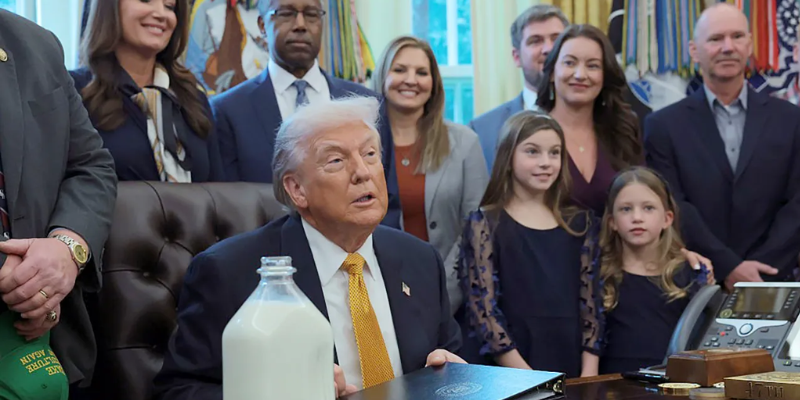
On January 14, 2026, President Donald J. Trump signed the Whole Milk for Healthy Kids Act of 2025 into federal law, marking a significant change in U.S. school nutrition policy by allowing whole milk and 2% milk to be offered in schools once again.
Background: How U.S. School Milk Policy Changed
For more than a decade, federal school meal standards restricted milk options in schools to low-fat (1%) or fat-free (skim) milk, a policy enacted under the Healthy, Hunger-Free Kids Act of 2010 signed by President Barack Obama. That 2010 law aimed to improve school nutrition and curb childhood obesity by limiting calories, saturated fat and sodium in school meals — including limiting higher-fat milk options.
However, many parents, dairy industry groups, and some nutrition advocates argued that limiting milk choices led to declining milk consumption, increased food waste, and missed opportunities for children to receive key nutrients such as calcium and vitamin D.
What the Whole Milk for Healthy Kids Act Does
The new law — Senate Bill S.222, the Whole Milk for Healthy Kids Act of 2025 — revises the requirements for milk served under the National School Lunch Program, restoring whole and 2% milk alongside the existing 1%, skim and lactose-free options.
Under the act:
- Schools may serve whole and 2% milk once again, a practice largely eliminated since the 2010 nutrition standards went into effect.
- Non-dairy milk alternatives that meet federal nutrition standards can also be offered, with only a parental note, rather than a medical note, required for students who need alternatives.
- The law also aligns school meal policy with the updated Dietary Guidelines for Americans (2025–2030), which re-emphasize full-fat dairy as part of a balanced diet.
Who Sponsored the Law and Why
The legislation was introduced by Senator Roger Marshall (R-KS) and gained bipartisan support, including co-sponsorship from Senator Peter Welch (D-VT).
In remarks following the signing, proponents highlighted that the law not only expands milk choice for children but also supports America’s dairy farmers by restoring a key market for their products.
Reactions and Implications
Supporters of the law — including dairy industry associations — praised the change as a win for child nutrition, student choice, and the dairy economy.
Critics, including some public health experts, continue to debate the health implications of increased saturated fat consumption in children’s diets, although the updated dietary guidelines reflect a shifting scientific view on full-fat dairy.
Approximately 30 million students in the National School Lunch Program could be affected as schools begin implementation ahead of the upcoming school year.
Conclusion
The Whole Milk for Healthy Kids Act represents one of the most notable changes to school nutrition policy in more than a decade. By reintroducing whole milk as a school meal option and modernizing dairy policy under federal guidelines, the law reflects evolving views on nutrition and a renewed focus on flexibility and choice in school lunches — while also addressing longstanding concerns from dairy producers and parents alike.