
Understanding Pistachio Pollination: Why Bloom Timing Can Make or Break Your Harvest
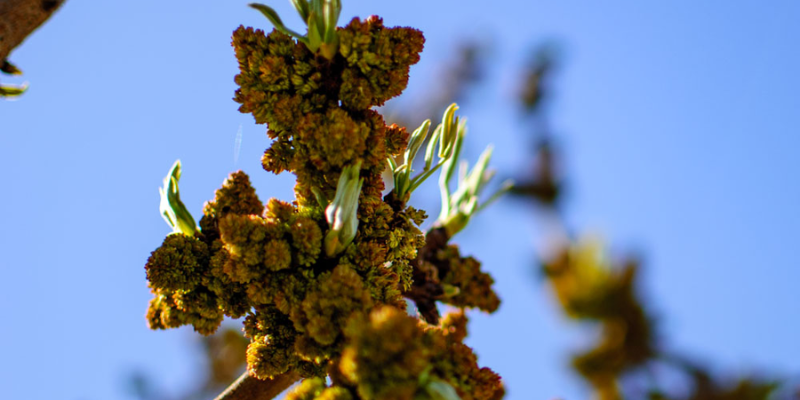
California’s pistachio industry is having a moment. The U.S. pistachio industry just closed out its largest crop on record, finishing just over 1.5 billion pounds, and the 2025/26 season is projected to reach 1.6 billion pounds, a 40 percent year-over-year increase. Global demand is surging, prices are firming up, and orchards across the San Joaquin Valley are expanding. But right now, in orchards like those near Huron, California, the season’s fate is being decided by something far simpler than market projections, it’s being decided by the wind.
The 4% That Makes Everything Happen
Pistachio orchards are planted with both male and female trees, but the split is far from equal. Male trees make up only about 4% of a typical orchard planting. That small percentage, however, carries the entire operation on its shoulders. No male trees, no pollen. No pollen, no nuts.
Right now, male pistachio trees are producing dense clusters loaded with yellow pollen dust. There are no bees involved in this process, pistachios are wind-pollinated, which makes them unique among California’s major tree nuts, and it makes timing absolutely critical.
Timing Is Everything
Here’s where growers can quietly lose yield without even knowing it: if the male bloom doesn’t overlap with the female bloom, all that pollen production is worthless. The window is narrow, and when it’s missed, it shows up at harvest and not in the field.
On the female trees, tight little flower clusters line the shoots. These small, easy-to-miss flowers are what receive the wind-carried pollen from the males. Once pollinated, those flowers become nuts. The chain is that direct: pollen reaches the flower, flower becomes nut, nut gets harvested. Break any link, and yield drops.
Why This Matters More Than Ever
The California pistachio industry is entering a more mature phase, with slowing acreage growth and more balanced market fundamentals, bearing acreage is expected to plateau by the end of the decade. That means the era of simply planting more trees to grow production is winding down. The growers who come out ahead in this next chapter will be the ones who maximize yield from the acres they already have.
Pistachios are a $2-billion-a-year industry in California, and the margin between a good year and a great one increasingly comes down to the details: water management, variety selection, and yes, whether your male and female trees are blooming at the same time.
At a time when the whole industry is watching markets, export demand, and water policy, it’s worth remembering that the crop still starts the same way it always has: with pollen, wind, and whether the timing lines up.
See It for Yourself
Want to see it straight from the field? Jason Errecart from Diversified Land Management breaks down exactly what’s happening in the orchard during bloom season, walking you through the difference between male and female pistachio trees and why that critical 4% can determine your entire harvest. Watch the full video here!