
The Strawberry Capital of the World Has The Second-Highest Childhood Cancer Rate In California And Driscoll’s Is At The Center Of The Debate
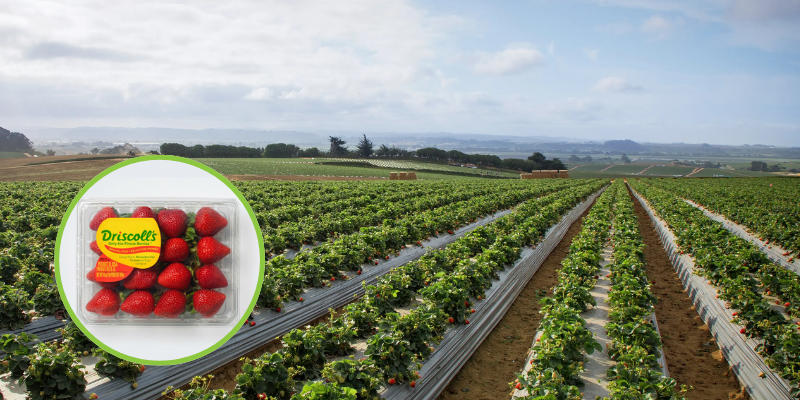
A viral social media post last week has reignited a long-running and deeply contested debate in California’s berry-growing heartland: Are the pesticides used on strawberry fields near Watsonville contributing to elevated childhood cancer rates in Santa Cruz County and what responsibility, if any, does Driscoll’s, the world’s largest berry company, bear?
The story is not new. But the attention it has been receiving these last couple of weeks, amplified by social media and backed by years of public health data, community activism, ongoing litigation, and competing regulatory interpretations makes it one the agricultural industry cannot ignore.
Here is what the data says, what advocates are claiming, what Driscoll’s says in response, and what remains scientifically unresolved.
The Numbers Behind the Controversy
Santa Cruz County is home to Driscoll’s world headquarters in Watsonville and is the center of California’s $3 billion strawberry industry. It is also, according to state health data, one of the most heavily pesticide-affected counties in California.
Dr. Valerie Bengal, a physician who practiced for decades in Salinas and the Pajaro Valley, has cited state data showing that Santa Cruz County’s pediatric cancer rate for children ages 0 to 14 was 22.5 cases per 100,000 children between 2017 and 2021, 38% above the overall California rate of 16.3 cases per 100,000. The county had the second-highest pediatric cancer rate of any county in California during that period.
According to the Campaign for Organic and Regenerative Agriculture (CORA), a Watsonville-based advocacy group, over 5,060 acres of fields in the Pajaro Valley are treated each year with pesticides identified as carcinogenic or associated with other serious health conditions. The group also reports that more than one million pounds of pesticides are applied in Santa Cruz County annually, with the majority concentrated in the Pajaro Valley, often near schools and homes.
Two soil fumigants are at the center of the health debate:
1,3-Dichloropropene (1,3-D / Telone): A soil fumigant widely used in strawberry production and officially listed by California as a probable human carcinogen. According to a February 2026 lawsuit filed against the California Department of Pesticide Regulation (DPR), at least 169.3 million pounds of 1,3-D have been applied to California farmlands between 2010 and 2024 more than 7 million pounds in 2024 alone across 43,000 acres statewide.
Chloropicrin: A co-fumigant originally developed as a chemical warfare agent in World War I. It is used alongside 1,3-D in strawberry field preparation. Regulators have noted it is so acutely toxic that long-term carcinogenicity studies in animals are difficult to conduct because test subjects die from acute exposure before chronic effects can be assessed.
Both chemicals are applied to sterilize the soil before planting, a practice considered essential by conventional strawberry growers for managing soilborne pests and diseases that would otherwise devastate yields.
What Community Advocates and Health Professionals Are Saying
Dr. Ann López, executive director at the Center for Farmworker Families and a longtime researcher in the Pajaro Valley, has cited state records showing that “98.5% of the pesticides associated with childhood leukemia and 95.2% of pesticides tied to childhood brain cancer were applied in 2019 in Watsonville’s zip code alone.”
López and CORA have also pointed to a UCLA Fielding School of Public Health study identifying 13 pesticides correlated to the onset of childhood cancer between birth and age 5, when the mother lives within 2.5 miles of pesticide application during pregnancy. Latinx schoolchildren, López notes, are 3.2 times more likely than white students to attend schools with the highest exposure to the most hazardous pesticides, a disparity she says is especially acute in the Pajaro Valley.
Adam Scow, co-founder of CORA, has raised a concern that goes beyond scheduled spray events: “Even though the farms are not allowed to spray during school hours, these are fumigant gases. Some of them persist in the air for up to 72 hours and can travel up to six miles.” He argues that no-spray windows during school hours do not adequately address community exposure.
CORA’s specific ask of Driscoll’s has been targeted and limited: convert the 20 to 30 conventional fields closest to schools and residential areas to organic. The group points out that Driscoll’s already operates organic fields in the region and has the technical expertise to manage them. Advocates argue the company has been slow to act despite years of documented community concern.
In a notable demonstration of pressure in September 2025, community activist Omar Dieguez, who grew up in Watsonville, undertook a 30-day hunger strike alongside another Watsonville resident, Providence Martinez Alaniz, calling on Driscoll’s and California Giant Berry Farms to cease pesticide applications near schools. Farmworker activist Dolores Huerta, at age 95, appeared at a Watsonville rally in support of the cause.
A public pesticide mapping tool at PesticideInfo.org now allows anyone to search pesticide application data by school district. Researchers have used it to document that 393,453 pounds of the fumigant 1,3-D were applied within the Pajaro Valley Unified School District boundaries in recent years.
What Driscoll’s Says
Driscoll’s maintains a consistent and legally grounded position: the company and its independent contract growers are in full compliance with all applicable state and federal pesticide regulations.
In a statement issued to the community, Driscoll’s said: “We want to assure our local community that the use of pesticides, including their application near schools, is strictly regulated and closely monitored by multiple government agencies. This includes the U.S. Environmental Protection Agency (EPA), the California Department of Pesticide Regulation (CDPR), and the County Agricultural Commissioner’s Offices. All independent growers are expected and required to follow pesticide regulations. Every pesticide used on our fields is approved by the EPA and CDPR.”
On its food safety page, Driscoll’s states its goal is to “minimize the use of pesticides” and that its independent growers must operate under an Integrated Pest Management (IPM) program that uses “natural methods, including the use of bees and beneficial insects, to reduce diseases and control pests as the first option,” with chemical pesticides applied only when necessary.
The company has acknowledged a growing organic segment of its business. Currently, approximately 15–20% of Driscoll’s production is certified organic. Driscoll’s controls an estimated 60–70% of the U.S. organic berry market. The company has publicly stated a commitment to expanding organic production over time.
In a 2022 exchange documented by Lookout Santa Cruz, Driscoll’s CEO Miles Reiter responded to a letter from CORA saying he looked forward to a more organic future in Watsonville and that school zones were a priority. However, as of 2026, no formal commitments or timelines for conversion near schools have been publicly announced by the company.
When pressed more recently for direct responses to community health concerns, Driscoll’s directed media inquiries to its publicly available compliance statements rather than engaging directly with the epidemiological data cited by advocates.
The Regulatory Gap at Issue
A critical backdrop to this story is a February 2026 lawsuit filed in Alameda County Superior Court, not directed at Driscoll’s, but at the California DPR, which has significant implications for berry growers and the entire conventional strawberry industry.
Farmworker advocates and community residents argue that DPR issued two conflicting regulations for 1,3-D: one for people living near fields (residential bystanders, in effect since 2024), and one for people working near fields (occupational bystanders, which took effect January 1, 2026). The two rules set different permissible exposure thresholds for what are, in practice, the same people, farmworkers who both work and live near the fields.
California’s own Office of Environmental Health Hazard Assessment (OEHHA) set a lifetime cancer risk level for 1,3-D at 0.04 parts per billion. DPR’s residential bystander regulation, however, allows exposure up to 0.56 parts per billion, 14 times higher than OEHHA’s own safety threshold. The lawsuit contends this is legally inconsistent and violates the California Food and Agricultural Code by allowing exposure at levels the state’s own scientists have flagged as harmful.
DPR declined to comment, citing the pending litigation.
What Is Not Established
It is important to be clear about what the available data does not prove.
The elevated childhood cancer rate in Santa Cruz County is a documented statistical finding. It is not, however, proof of a direct causal link between Driscoll’s pesticide applications and those cancers. Childhood cancer has multiple potential contributing factors, and the body of epidemiological research, while pointing to associations between certain pesticide exposures and cancer risk, has not isolated a single cause-and-effect relationship specific to this region.
Public health researchers generally note that establishing causation in environmental cancer studies requires controlling for many variables, socioeconomic conditions, genetic factors, other environmental exposures, and data over long time periods. Advocates cite the precautionary principle, arguing that the weight of evidence is sufficient to demand action now rather than waiting for proof. That debate, between precaution and regulatory certainty, sits at the heart of this issue.
The Bigger Picture for Ag Professionals
This story has implications well beyond Driscoll’s and the Pajaro Valley. The use of soil fumigants, including 1,3-D and Chloropicrin, is widespread across California’s conventional strawberry, vegetable, and nursery industries. Any regulatory outcome from the pending DPR lawsuit could affect application windows, buffer zone requirements, and fumigant availability for growers across multiple commodities and regions.
The case also raises a broader question about the long-term social license for conventional production practices in California, particularly in densely populated agricultural areas where fields and schools, homes and orchards, exist in close proximity. Growers, commodity groups, and industry organizations will want to watch how this evolves, both in the courts and in the public conversation.
As of today, May 18, 2026, no new enforcement actions, regulatory changes, or formal responses from Driscoll’s have been announced. The DPR lawsuit remains active. The community advocacy campaign continues. The fields are being planted for the season.