Phomopsis and its Phytotoxin Development in the 2025 Season

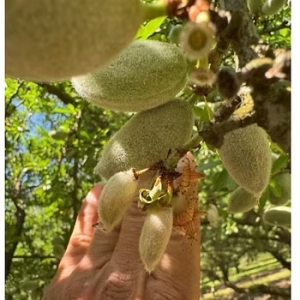
Phomopsis has damaged almond varieties early in the 2025 season. Whether a carryover from previous season that is stored in the trunk. The intensity of the damage for each variety is associated by the density of buds at bloom time. More so, late varieties would be affected with different intensity, relevant to the crop physiological developmental stage and the pathogen optimum temperature. In the central valley, in early April, Phomopsis’ signature symptoms are associated with dark green spots along the primordial leaves margin. Therefore, the phytotoxin chemical reaction raises the turgor pressure of the stomata fluid and rendering a plating ground for other pathogens, (Fig 1).
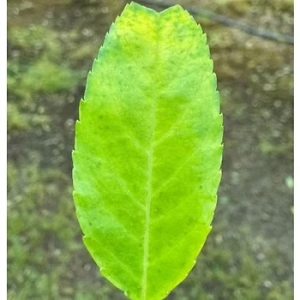
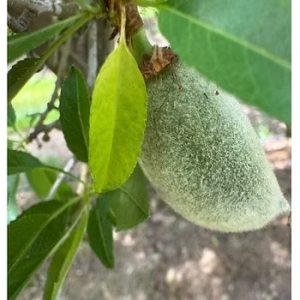
Figure 2
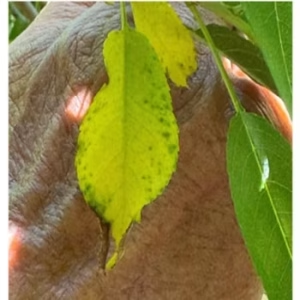
Figure 3
Due to unseasonal temperature spikes, young nuts associated with the blighted bud show a fresh nut dissociation at the peduncle, (Fig 2).
Continued high temperatures cause the symptoms to spread to the next leaf position, (Fig 3).
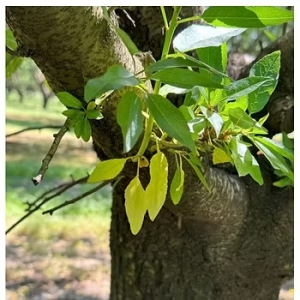
Infection starting at the lower scaffold tends to move upward rapidly, an indication that the phytotoxin resides low in the tree profile and progresses upward through the
vascular bundle to higher elevation when Phomopsis optimum temperature is reached (Fig 4).