
California Farm Exports to China Collapsed 64% in 2025, UC Study Finds — Central Valley Counties Lose Hundreds of Millions
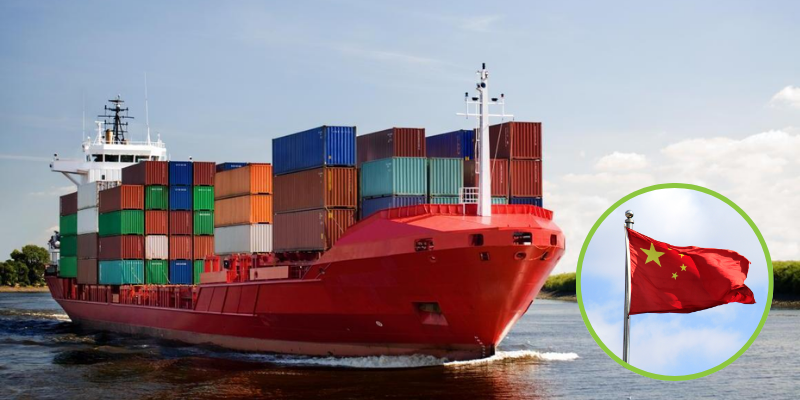
While California farmers are still planting their spring crops, a new peer-reviewed study from University of California economists has put a stark number on the damage the ongoing U.S.-China trade war has inflicted on the state’s agricultural sector: a 64% collapse in California farm export value to China in a single year, which is a loss of nearly one billion dollars.
The study, published in ARE Update, the peer-reviewed journal of the UC Giannini Foundation of Agricultural Economics, found that the combined export value of the top 13 California agricultural commodities shipped to China fell from an average of $1.55 billion annually (2020–2024) to just $554 million in 2025. The authors are Colin Carter, Distinguished Professor Emeritus of Agricultural and Resource Economics at UC Davis; Sandro Steinbach, Farmers Union Endowed Professor and Director of the Center for Agricultural Policy and Trade Studies at North Dakota State University; and Yasin Yildirim, a doctoral candidate in agribusiness and applied economics at NDSU.
“Rebuilding lost trust and market share will take years, if not decades, and would likely require hundreds of millions of dollars in market development efforts.”
— Colin Carter, Distinguished Professor Emeritus, UC Davis Department of Agricultural and Resource Economics
Tree Nuts Hit Hardest — Almonds and Pistachios Decimated
For the Central Valley, the commodity-level numbers are devastating. The study found that pistachio exports to China dropped by approximately $478 million in value, while almond exports fell by roughly $228 million. The volume declines were even steeper: almond shipments to China fell 77%, while pistachio shipments dropped 84%.
The losses extended well beyond nuts. Dairy exports to China fell $40.8 million, wine dropped $38.9 million, cotton declined $82.2 million, and hay fell $49 million. Fresh grapes, strawberries, oranges, rice, processed tomatoes, beef, and walnuts all recorded export reductions of 30% to 84% compared to their prior four-year averages, as Chinese retaliatory tariffs rapidly redirected purchasing toward competing exporters in Australia, Brazil, Chile, and Iran.
California is the sole U.S. producer of almonds and produces roughly 80% of the world’s supply making the state uniquely exposed to Chinese tariff pressure. The study notes that before the 2018-19 trade war, the U.S. held more than 90% of China’s tree nut import market. That share has now tumbled to just above 30%.
Fresno and Kern Counties Among the Hardest Hit in the Nation
The study’s county-level estimates make the local consequences concrete. Fresno County recorded estimated export losses of roughly $246 million. Kern County, the state’s top producer of almonds and pistachios, saw approximately $238 million in reduced export value, making it the single hardest-hit county in the state. Tulare County lost an estimated $108 million, while Kings County absorbed roughly $92 million in losses. Combined, Fresno and Kern counties alone account for an estimated $484 million in lost export value.
The authors note that the economic damage extends well beyond the farm gate. Processors, trucking companies, warehouses, and port facilities that support agricultural exports all feel the downstream effects when export volumes collapse. In some Central Valley communities, the study notes, the 2025 trade war losses rivaled pandemic-era disruptions, with revenue shortfalls cascading through local economies and affecting farm workers and even local tax revenue.
“Long-term trade relationships are fragile,” said co-author Steinbach. “Trade policy shifts can easily destroy more than they protect.”
How the Trade War Unfolded — and Why 2025 Was Different
The current collapse follows a familiar but intensified pattern. In 2018-19, California farmers absorbed massive losses when China first imposed retaliatory tariffs. Many spent years rebuilding relationships in India, the Middle East, and Southeast Asia. But just as those ties were strengthening, the conflict reignited.
In 2025, the United States imposed sweeping new tariffs on Chinese imports under the International Emergency Economic Powers Act, including a 10% baseline tariff on most trading partners and rates exceeding 100% on China. Beijing responded with steep retaliatory duties: almonds were hit with a new 45% import tariff, wine faced a 40% duty, and oranges, cotton, and dairy products also saw steep increases. The study’s Figure 1 shows Chinese tariff rates on California exports spiking above 100% for some commodities, what the authors describe as a “de facto market access blockade.”
The broader tariff environment also raised production costs for California growers. According to a January 2026 report from NDSU’s Agricultural Trade Monitor cited in the study, U.S. input tariffs, on steel, fertilizers, chemicals, parts, and equipment, cost the nation’s farmers nearly $1 billion in 2025. California’s capital-intensive crop portfolio, heavily reliant on imported irrigation infrastructure and harvesting equipment, faced particularly high exposure.
Federal Relief Has Largely Bypassed California
The study is blunt about federal support programs. During the 2018-19 trade war, California received less than 2% of $23 billion in USDA Market Facilitation Program payments despite bearing a disproportionate share of the export losses. The 2025 Farmer Bridge Assistance package promises $12 billion nationally, but the study notes that specialty crops, almonds, citrus, grapes, and dairy, are largely excluded, with California’s specialty crop growers sharing just up to $1 billion with sugar producers. The program, the authors write, prioritizes row crops in the Midwest over the crops that define California agriculture.
Rep. Jim Costa (D-Fresno), who championed California-specific provisions in the recently passed Farm, Food, and National Security Act of 2026, acknowledged the tension directly. “While this Farm Bill delivers some critical support for producers,” Costa said, “we cannot ignore the failures that brought us here: a misguided tariff strategy, cuts to hunger programs, and an ill-advised USDA reorganization.”
The Road Back Could Take Decades
Perhaps the most sobering finding of the UC study is its warning about what happens even after tariffs are lifted. The 2018-19 trade war offers a cautionary tale: Australia stepped in with duty-free almond shipments under its free-trade agreement with China and captured significant market share that California has never fully recovered. The study notes that before the first trade war, the U.S. held over 90% of China’s tree nut import market, a share that has since collapsed to just above 30%. The longer the current disruption continues, the more entrenched competing exporters become.
Carter was direct. Rebuilding lost trust and market share, he wrote, could take years or even decades, and would likely require hundreds of millions of dollars in coordinated market development efforts. The study also points to a structural irony: China, which was once a major market for California walnuts, has since become the world’s largest walnut producer and is now a net exporter, a direct long-term consequence of the first trade war that the second has only deepened.
For the tree nut growers of Fresno, Kern, Tulare, and Kings counties managing orchards that take years to mature and cannot be quickly repurposed — the policy uncertainty may be the most painful element of all.