
118,000 Acres and Falling: The Early 2026 Grape Season Can’t Hide What the Latest USDA Report Just Revealed
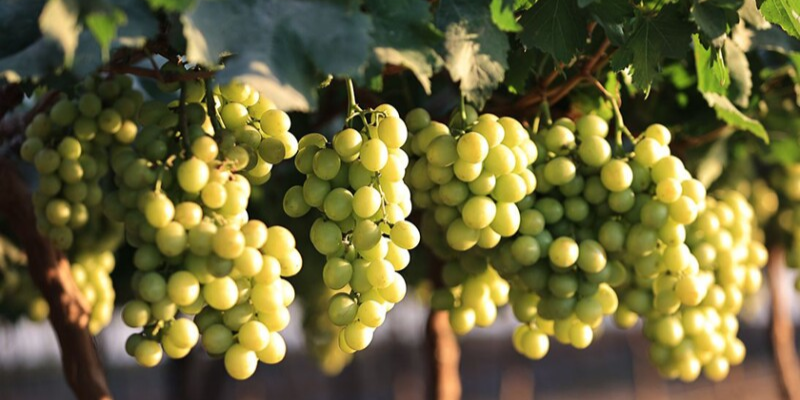
California’s 2026 table grape season is arriving ahead of schedule and by a significant margin. Driven by record-warm winter temperatures across the state, vineyards are blooming two to three weeks earlier than historical averages, setting up what could be the earliest harvest in decades. But a newly released federal acreage report tells a more complicated story beneath the surface: California’s table grape footprint is quietly shrinking, new plantings have fallen off a cliff, and growers heading into this early season are doing so with less cushion than in years past. For those in the industry, the 2026 season demands attention on multiple fronts simultaneously.
What’s Driving the Early Start
The culprit is straightforward: an extraordinary stretch of heat. According to NOAA’s National Centers for Environmental Information (NCEI) February 2026 Climate Report, the West and Southwest each recorded their warmest winter on record in 2025–26, with California among the states breaking their all-time winter temperature records. NOAA’s March 2026 climate report further confirmed that California recorded its single warmest March on record, with statewide temperatures actually surpassing the state’s typical May averages, capping off a winter-into-spring run of warmth that pushed vine development far ahead of schedule.
That heat sent vineyards into overdrive. Pete Hronis, Vice President of Delano-based Hronis, Inc., one of the Central Valley’s established citrus and table grape producers, reported his vineyards were already in full bloom weeks ahead of what he’s seen in more than four decades in the industry.
“If this temperature continues at this pace, we’ll probably be picking the earliest we’ve ever harvested grapes in our company’s history, as early as the week of the 15th of June,” Hronis said.
Growers in the Coachella Valley, where California’s season traditionally kicks off, are expecting to begin harvesting in early May. According to the California Table Grape Commission (CTGC), the early season harvest in the San Joaquin Valley is projected to follow in mid-June, running approximately two to three weeks ahead of historical norms.
What the USDA Data Actually Shows: A Shrinking Footprint
While an early season is grabbing headlines, growers and industry professionals need to understand the structural picture emerging from the just-released USDA NASS California Grape Acreage Report, 2025 Summary, released April 22, 2026 and produced cooperatively by the California Department of Food and Agriculture (CDFA) and USDA’s National Agricultural Statistics Service (NASS) Pacific Regional Office.
The numbers tell a clear story: California’s table grape industry is contracting.
According to the report, total table-type grape acreage in California stood at 118,000 acres in 2025, down from 120,000 acres in 2024 and 125,000 acres in 2023. That’s a 5.6% decline in total table grape acreage over just two years.
Bearing acreage, the vines actually producing fruit, held steady at 115,000 acres, unchanged from 2024. But the more telling figure is non-bearing acreage, which represents new plantings not yet in production. Non-bearing table grape acreage collapsed from 5,000 acres in both 2023 and 2024 down to just 3,000 acres in 2025, a 40% drop in a single year. That sharp decline in new plantings is a direct signal that growers are pulling back on investment in future production, reflecting the financial pressures many operations are navigating.
For context, the wine grape sector is experiencing an even steeper contraction: total wine grape acreage fell from 610,000 acres in 2023 to 540,000 acres in 2025, a 6.9% decline, with non-bearing wine grape acreage dropping 25% in a single year as well.
Variety Shifts: What Growers Are and Aren’t Planting
The detailed variety data in the USDA NASS report reveals important shifts in what California table grape growers are choosing to grow and what they’re walking away from.
Flame Seedless remains the state’s single largest table grape variety at 10,506 total acres, but even this mainstay has slipped slightly from 10,547 acres the prior year, with nearly no new plantings recorded in 2025.
Scarlet Royal holds at 6,047 acres, while Autumn King stands at 6,312 acres, both showing minimal new investment. Red Globe, a once-dominant export variety, continues a gradual decline to 5,205 acres from 5,255 acres.
The standout variety showing real growth momentum is Autumn Crisp, which climbed to 4,154 total acres, up from 4,154 the prior year with 448 non-bearing acres still coming online. Sweet Globe also continues modest growth at 1,748 acres with 105 non-bearing acres in the pipeline. These newer proprietary green seedless varieties are increasingly where grower confidence and capital are being directed, reflecting both higher yields and stronger retail demand.
Notable declines are visible across several traditional red varieties, consistent with broader shifts in consumer preference toward green and specialty seedless grapes.
The Opportunity: A Longer Retail Window
Despite the contracting acreage picture, the early 2026 season presents genuine commercial upside for well-positioned growers.
CTGC President and CEO Ian LeMay has framed the early start as a meaningful advantage for the industry.
“California grapes have always enjoyed a long season, with grapes often being promoted into January, but an early start to the season this year lets retailers get a head start on promotions,” LeMay said.
California’s long production window, historically running from late spring through December, gives the state a structural advantage in both domestic and international markets. In 2025, California table grapes reached more than 56 countries, and the CTGC is pushing that reach further in 2026 with promotional campaigns targeting 23 international markets, including Australia, Canada, Colombia, Hong Kong, Japan, Mexico, South Korea, Taiwan, the UAE, the UK, and Vietnam.
That campaign is backed by a $2.2 million federal grant awarded to the CTGC through the USDA Foreign Agricultural Service (FAS) America First Trade Promotion Program (AFTPP).
“This award represents a meaningful investment in the continued success of the California industry and the communities the industry supports,” LeMay said in the CTGC’s official statement.
The Risks: Compressed Timelines, Import Pressure, and Water
The early start brings real operational stress that growers cannot afford to underestimate.
John Pandol, Director of Special Projects at Pandol Brothers, noted that grower schedules in his region are running 15 to 23 days ahead of normal, meaning the same volume of field work, chemical applications, and labor management must be compressed into a significantly shorter window.
“Growers who have large plantings of single varieties have this challenge magnified, and often don’t have enough labor or equipment to get the jobs done timely, which can negatively impact quality or yield,” Pandol noted.
Beyond the vineyard, an early California harvest increases the risk of overlap with imported table grapes from Chile and Peru, whose export seasons align with California’s early window. If supply from multiple origins hits retail simultaneously, it could compress the domestic marketing window and pressure early-season prices.
Water also remains a persistent concern. The California Department of Water Resources (DWR) has reported tightening groundwater supplies and below-average snowpack heading into the 2026 growing season across parts of the San Joaquin Valley — adding cost pressure and irrigation uncertainty for growers already watching their margins closely.
Reading the Data Together: What It Means for Growers
Taken together, the early 2026 season and the USDA NASS acreage data tell a story of an industry at an inflection point. The 40% drop in non-bearing table grape acreage is the clearest signal yet that California growers are not investing in expansion, they’re consolidating, managing costs, and waiting for conditions to stabilize. That supply discipline, combined with steady bearing acreage and strong global demand, could work in growers’ favor on pricing if the 2026 season executes well.
For growers in Coachella, harvest decisions are already being made. For San Joaquin Valley producers, mid-June may arrive faster than any season in recent memory. The growers who get ahead of the compressed timeline, on labor, water, and logistics, stand to benefit most from what is shaping up to be one of California’s most unusual and potentially rewarding table grape seasons in years.