
Net Zero by 2045, but First, Another Tanker from Iraq: The Fuel Crisis California Farmers Can’t Ignore
The Pledge
California has a legally binding goal to achieve statewide carbon neutrality no later than 2045. The state’s Scoping Plan, which Governor Newsom has described as “the most ambitious set of climate goals of any jurisdiction in the world”, commits to building a 100% clean energy grid, ramping up carbon removal, and protecting residents from oil industry pollution. The ultimate target is a 94% reduction in oil consumption and full carbon neutrality by 2045.
The Reality on the Water
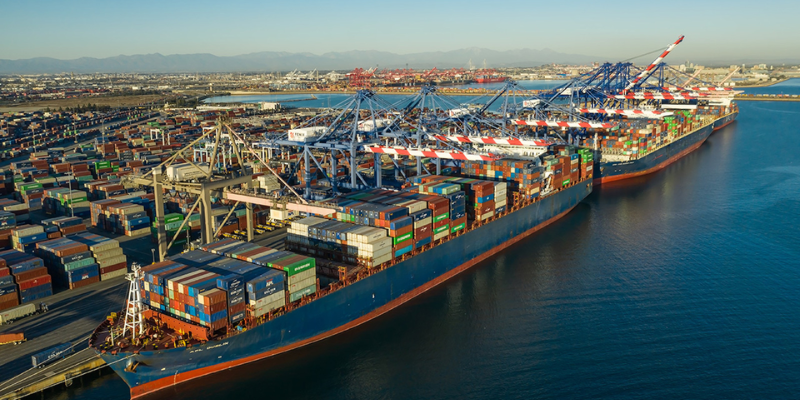
While those pledges are made in Sacramento, tankers keep arriving at California’s ports. California refineries process enormous volumes of imported crude oil. In-state crude production has been in steady decline for four decades, and refineries now import roughly 75% of the crude oil they process, mostly through the state’s ports.
To be precise about what’s actually moving: California imports both raw crude oil and finished petroleum products. The state currently produces approximately 325,000 barrels of crude per day in-state while importing 1.1 million barrels per day, meaning it produces less than a quarter of what its refineries consume. On top of that, gasoline imports reached record highs in 2025, averaging almost 50,000 barrels per day, sourced mainly from India, South Korea, and Japan.
California’s foreign oil imports have tripled over the last 20 years, a trend running opposite to most other U.S. states, which have reduced their import dependency over the same period.
Where the Oil Comes From
As of 2025, Iraq (22.3%) and Saudi Arabia (16.4%) together account for nearly 40% of California’s foreign crude supply, alongside Ecuador (16.9%) and Colombia (7%). Both Iraq and Saudi Arabia export through the Strait of Hormuz, making the stability of that waterway a direct concern for California’s fuel supply chain, even though the state does not import Iranian crude directly.
That vulnerability came into sharp relief in early 2026. The Strait of Hormuz was largely blocked from February 28, 2026, after the United States and Israel launched strikes on Iran, with Iranian forces boarding vessels and laying sea mines in retaliation. It was declared open to commercial vessels again on April 17, 2026, in line with a ceasefire agreement. Even now, shipping insurance premiums for the transit could be as much as 20 times higher than before the conflict began, costs that ultimately flow downstream to California consumers and businesses.
The Russian Oil Loophole
The Hormuz crisis also revealed a less-discussed dimension of California’s supply chain. Through a so-called “refining loophole,” California has been importing fuel made from Russian crude oil that was refined in a third country, primarily India’s Jamnagar refinery complex. More than 9 million barrels arrived via this loophole in 2025. According to one analyst at the Centre for Research on Energy and Clean Air, California’s imports through this channel have “sent hundreds of millions of dollars to the Kremlin war chest.”
The Refinery Cliff
The contradiction sharpens when California’s refining future is examined. The number of operational refineries in the state has fallen from 20 in 2010 to just 12 in 2025, while California still consumes 1.4 to 1.6 million barrels per day of petroleum products, five to six times what it produces in-state.
Two major closures are accelerating this trend. The confirmed shutdowns of the Phillips 66 Los Angeles refinery and Valero’s Benicia facility will reduce California’s refining capacity by approximately 17%, shrinking the buffer between supply and demand to just 6.3%. A major fire at PBF Energy’s Martinez refinery in February 2025 demonstrated how precarious that margin is, temporarily removing 139,000 barrels per day of capacity and forcing emergency imports.
Fewer in-state refineries means more dependence on imported finished gasoline and California’s unique CARBOB fuel blend standard means that supply can only come from a narrow pool of global producers. California’s gasoline prices averaged $4.50 per gallon in 2025, compared to a $2.90 national average.
Why California Growers Are Watching This Closely
For California’s agricultural community, the state’s oil import dependency is not an abstract policy debate, it is a direct threat to operating margins. California’s agricultural exports totaled $23.8 billion in 2024, with the state growing nearly half of the country’s vegetables and more than three-quarters of its fruits and nuts. The San Joaquin Valley alone, home to Fresno, Kern, and Tulare Counties, the nation’s top three agricultural counties by revenue, generates more than $24 billion in crop revenues annually and employs around 340,000 people.
Every link in that supply chain runs on diesel and gasoline, from the tractors and harvesters in the field, to the refrigerated trucks moving product to processors and distributors, to the packing houses and cold storage facilities that prepare California produce for domestic and export markets. California already has the highest diesel prices of any state, averaging $4.86 per gallon compared to the national average of $3.53.
Those prices are not static. With the two major refinery closures reducing in-state capacity by 17%, multiple university studies have projected significant additional price increases. The University of California’s Giannini Foundation of Agricultural Economics estimated California’s gas prices could rise by $1.21 per gallon if no further market changes occur. A University of Southern California study projected prices could reach $8.44 a gallon by end of 2026. Ryan Jacobsen, an almond and raisin grape grower and CEO of the Fresno County Farm Bureau, has stated that “agriculture depends heavily on affordable energy for producing and processing food, yet uncertainty over the future availability and cost of diesel and gasoline makes economic recovery increasingly difficult.”
The Low Carbon Fuel Standard (LCFS) adds another layer of cost pressure. LCFS-related costs for diesel climbed from roughly 10–11 cents per gallon in late 2024 to about 19 cents by early 2025. Following CARB’s major overhaul of the program in July 2025, one University of Pennsylvania analysis projected the combined effect of the amendments could add approximately 65 cents per gallon in the near term, rising to $1.50 per gallon by 2035. For farms operating on thin margins in an already challenging commodity price environment, these are not rounding errors.
California farmers interviewed by Farm Progress and Fox Business describe fuel costs as one of the most acute pressures they face. One Moorpark farmer noted that hauling vegetables to market, which once cost around $60 to fill a pickup truck, now costs nearly $200. A Fresno County operation reported spending approximately $950 to fuel a single tractor for one day during planting season. Unlike other industries, growers generally cannot pass those costs on. “We farmers don’t have any way to recoup the higher gas costs or pass them on to consumers, so we have to swallow them,” stated one Fresno County grower.
The Hormuz closure added a geopolitical dimension to what was already a structural cost problem. California’s dependence on Middle Eastern crude oil that must transit the world’s most strategically contested waterway, means that international conflicts thousands of miles away ripple directly into the price a San Joaquin Valley almond grower pays to run a harvester. The LCFS changes also directly affect the agricultural community’s ability to participate in the biofuel economy: CARB’s new rules cap crop-based biofuels and phase out incentives for dairy methane digesters, limiting two revenue streams that California farms had hoped would offset transition costs.
Green Ports, Fossil Fuel Cargoes
Even California’s ports present a study in contrast. Long Beach Container Terminal has transitioned 67% of its cargo handling equipment to electric and secured over $100 million in federal and state grants for clean infrastructure. The Ports of Long Beach and Los Angeles have entered a binding agreement to develop zero-emission port infrastructure by 2029.
The cranes unloading the ships are increasingly electric. The ships themselves continue to deliver fossil fuels.
A Structural Problem, Not Just a Political One
To be fair, the structural drivers of California’s oil dependency are not purely political. In-state crude production has fallen steadily for four decades largely due to geology and economics. California has been pumping oil for 150 years and much of what remains requires energy-intensive extraction. Nearly half of recently approved drilling permits have gone unused, as refiners choose to source crude from cheaper global markets rather than drill domestically.
But that complexity does not dissolve the core tension. Tankers transporting foreign crude emit approximately 50% more CO₂ per barrel-mile than pipelines or rail, meaning California’s import dependency is actively adding to the carbon footprint the state is pledging to eliminate. California’s own Legislative Analyst’s Office has warned that the state’s 2045 plan lacks sufficient detail, cautioning that failing to develop a credible path to statewide greenhouse gas goals could undermine California’s ability to serve as a model for other jurisdictions.
California still consumes between five and six times more petroleum than it produces. Its foreign oil dependency has tripled in two decades. Its refineries are closing. Its special fuel standards lock it into a narrow set of global suppliers. And the 2045 net zero deadline is now less than 19 years away.
For the farmers feeding the nation from the Central Valley, that gap is not measured in policy documents or press releases. It is measured in dollars per gallon, dollars per acre, and the margin between a viable harvest and a farm that cannot survive another season.
The gap between California’s green ambitions and its fossil fuel present is not a matter of political spin, it is a documented, data-backed reality that the state’s policymakers have yet to bridge.