
The Hottest March in Recorded History Just Gave California Cherry Growers Their Most Compressed and Dangerous Season Ever
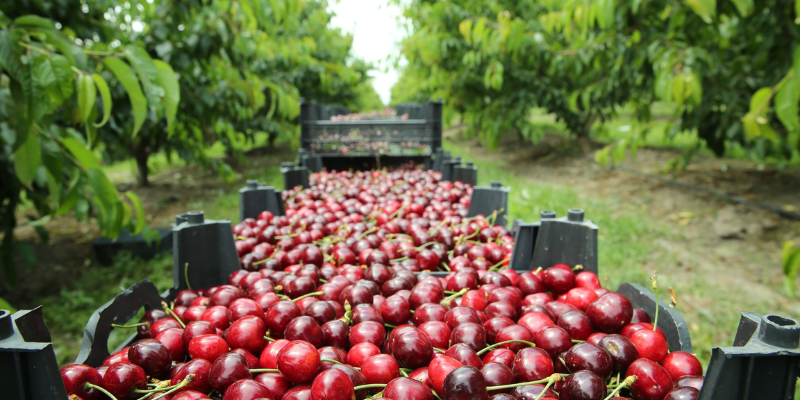
The cherries were supposed to be California’s redemption story this year. After back-to-back seasons that left growers in the San Joaquin Valley reeling, one year scorched by relentless triple-digit heat, the next drowned by storms bad enough to trigger a formal disaster declaration, 2026 was shaping up to be the bounce-back the industry had been waiting for. Trees were loaded. Fruit looked good. And for the first time in what felt like forever, there was cautious optimism in the orchards. Then March arrived. Then April. And with them, a reminder that in the cherry business, nothing is ever guaranteed.
The Hottest March on Record Changed Everything
According to the National Weather Service, March 2026 was the hottest on record across the San Joaquin Valley, the heart of California’s cherry country. That might sound like good news for fruit development. It wasn’t, at least not entirely.
The record-breaking heat triggered what growers call a “compressed bloom” essentially, every tree in the valley woke up and flowered at nearly the same moment. Normally, California’s cherry harvest rolls gradually from south to north over several weeks, giving the industry time to pick, pack, ship and sell fruit in an orderly fashion. This year, that window has been cut dramatically. The California Cherry Board reported the first shipments of the 2026 season left the valley as early as April 14, one of the earliest starts in more than a decade, and the bulk of the entire statewide crop is now expected to ripen within just a few weeks in May.
For growers, that’s both exciting and nerve-wracking. California cherries hitting store shelves before Washington state’s crop is even close to ready is a genuine market advantage such as premium prices, strong consumer demand, no competition. But it also means the entire season is crammed into a narrow window, creating real logistical pressure: Will there be enough harvest crews when every orchard needs pickers at the same moment? Enough cold storage capacity? Enough trucks on the road?
“The cherry deal will be fast and short-lived this year.”
— Industry assessment reported by the California Cherry Board, April 2026
Why Some Orchards Are Producing Almost Nothing
Here’s where the story gets complicated and regional. The same warm winter that compressed the San Joaquin Valley bloom didn’t affect all of California equally.
According to the UC ANR Division of Agriculture and Natural Resources, sweet cherry trees require between 700 and 800 “chilling hours”, stretches of time when temperatures fall below 46°F but stay above freezing, to properly break dormancy and produce a strong crop. Think of it as the tree’s required winter rest. Without it, fruit set is weak, uneven, or doesn’t happen at all. This past winter simply wasn’t cold enough in parts of the state to meet that threshold.
In Santa Clara County, the results have been devastating. Some orchards are reporting just three or four cherries per tree. One operation managing 550 acres of cherry trees described blocks where the harvest is “virtually non-existent.” Because cherries must be hand-picked, which is an expensive and labor-intensive process, some growers have made the painful calculation that it simply doesn’t pay to send crews into the fields for such a meager return. UC Cooperative Extension notes this scenario plays out in years when trees don’t receive adequate dormancy conditions.
For San Joaquin County growers, however, the story is far more promising. This is the county that produces roughly half of all California cherries, and the warm spring here landed at a much better time, accelerating ripening without the same chill-hour deficit that hammered other regions.
The Rain Problem: When Water Becomes the Enemy
Just when it looked like the Central Valley crop might sail to a triumphant finish, the weather had one more card to play.
UC Cooperative Extension’s IPM Program explains the science plainly: ripe cherries are essentially little pressure vessels. Their skin is porous, and their root systems readily absorb rainfall. When a storm rolls through at the wrong moment, when the fruit is at what growers call the “straw stage,” nearly ready to pick, the cherry absorbs water faster than its skin can handle and cracks open. Split cherries are unmarketable, period.
The weather timeline this spring has been brutal:
March 2026
- Hottest March on record across San Joaquin Valley per the National Weather Service. Simultaneous bloom across orchards triggers earliest season start in over a decade.
April 10-12
- Stockton district hit with 3 rain events totaling 2.7 inches during critical fruit set stage. Stockton represents a major share of domestic fresh cherry supply.
April 14
- First 2026 cherry shipments depart ahead of incoming storms, per California Cherry Board statistics.
Late April
- Northern growing areas, Modesto, Stockton, Lodi, Linden, hit by 1.5 to 3 inches of rain in a single day, plus hail. Early indicators show significant damage to Coral and Chelan varieties just coming into harvest.
Week of April 27
- Growers across the state actively assessing damage. Kern County largely spared; Central Valley reports modest damage; northern districts tallying serious losses on early varieties.
To fight the rain, growers have been deploying every weapon available, including low-flying helicopters and commercial air-blast sprayers used to literally blow water off trees before it can be absorbed into the fruit. The UC IPM Program specifically recommends this approach and notes that even prompt harvesting and chilling of affected fruit can help limit losses. It’s an extreme and expensive measure that illustrates just how high the stakes are when you’re talking about a perishable crop with a two-week shelf life.
A Comeback, Even If It’s a Complicated One
Despite everything, 2026 is still a recovery year for the California cherry industry by almost any measure that matters.
According to the USDA National Agricultural Statistics Service, California produced 105,000 tons of sweet cherries in 2024, making it the nation’s second-largest sweet cherry state behind Washington’s 185,000 tons. The USDA NASS Noncitrus Fruits and Nuts 2024 Summary puts the national sweet cherry industry at $814 million in utilized production value. California’s share of that, both in volume and in dollars, is enormous, and after 2025’s crop fell by roughly 50% from prior-year averages, the industry badly needed the rebound that 2026 is now delivering, even imperfectly.
The early timing advantage is real. With California fruit hitting stores 4 to 6 weeks ahead of Washington state’s crop, growers are positioned to capture strong early-season prices before the national market gets flooded later in the summer. That market window is one of the most valuable assets California cherry growers have and this year, the compressed season has actually sharpened it.
Zoom out, and you can see why this season carries so much weight. The CDFA California Agricultural Statistics Review shows the state’s farms and ranches generated $59.4 billion in total cash receipts in 2023, a state record, with fruits and nuts among the leading drivers. That prosperity depends on seasons like this one going right. When USDA opened its Supplemental Disaster Relief Program in late 2025 to support growers hit by 2023-24 climate disasters, CDFA Secretary Karen Ross said plainly that “California’s specialty crop producers have faced repeated and devastating climate-driven impacts in recent years.” The cherry industry is Exhibit A.
“California’s specialty crop producers have faced repeated and devastating climate-driven impacts in recent years.”
— CDFA Secretary Karen Ross, November 2025
Right now, growers across the San Joaquin Valley are doing what they’ve always done, watching the sky, walking their rows, and hoping the next forecast is kinder than the last. The 2026 California cherry season will not be the clean, uncomplicated comeback the industry dreamed of after two rough years. But for a crop that has survived disaster declarations, record heat, and back-to-back heartbreak, it may still end up as something growers haven’t had in a while: a season worth talking about, for the right reasons.