
90% Drop in China. Record Heat at Bloom. Three Countries Struggling. What It All Means for the 2026 Pistachio Season.
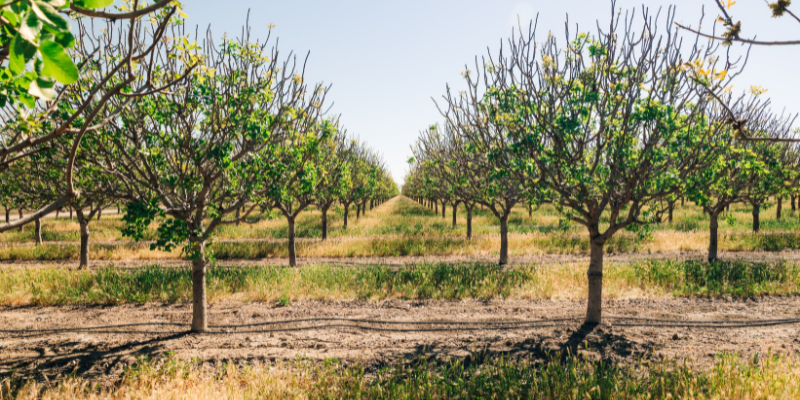
The Administrative Committee for Pistachios released its March 2026 Inventory and Shipment Report on April 15th, and on the surface, the numbers look strong. But underneath the solid movement figures, a growing set of concerns about the 2026 crop is quietly building. Here’s what California pistachio growers, handlers, and industry watchers need to understand right now.
Where Shipments Stand: The Good News
Through March 31, 2026, the pistachio industry has shipped a combined 756.2 million pounds for the 2025/2026 crop year, which is a significant jump from the 617.5 million pounds shipped through the same point last year, a 22.4% year-over-year increase.
The breakdown tells the real story:
- Domestic shipments: 146.0 million lbs (up from 142.6M last year)
- Export shipments: 610.2 million lbs (up from 474.9M last year and a 28.5% increase)
Exports are clearly driving the momentum. With five shipment months still remaining before harvest, the industry is well ahead of last year’s pace on every metric.
Estimated marketable inventory as of March 31 sits at 598.4 million pounds, with inventories steadily declining as the season moves forward. That tightening supply, paired with robust global demand, sets up a favorable pricing environment heading into the back half of the crop year.
Where the Exports Are Going
Europe remains the dominant destination for U.S. pistachios, accounting for 219.8 million pounds year-to-date, a notable jump from 166.9 million in the same period last year. Germany continues to lead European demand at 73.5 million lbs YTD, with Italy, Spain, France, and the Netherlands all showing strong growth.
Asia collectively absorbed 234.3 million pounds YTD, though the regional story is complicated. Vietnam has emerged as one of the most dramatic growth markets, with YTD shipments reaching 112.6 million pounds, compared to just 27.9 million in the same period last year. That’s a staggering increase. Meanwhile, China dropped sharply from 145.5 million pounds to just 15.1 million pounds YTD, a direct consequence of the ongoing trade war and retaliatory tariffs that have made U.S. pistachios effectively uncompetitive in the Chinese market.
The Middle East and Africa region showed strong growth as well, with YTD shipments rising from 63.9 million to 121.0 million pounds, led by Turkey, the UAE, Jordan, and Saudi Arabia, markets that continue to demonstrate deep, consistent demand for California pistachios.
You can view the full export destination breakdown in the official ACP report.
The China Problem and the Realignment Happening Around It
The collapse in China shipments deserves its own mention. A year ago, China was receiving over 141 million pounds of U.S. pistachios through seven months of the crop year. This year that number is 14.9 million, a 90% decline. Retaliatory tariffs following the ongoing U.S.-China trade dispute have effectively shut California pistachios out of the world’s most populous market.
The UC Giannini Foundation’s most recent trade analysis found that California’s pistachio exports to China fell by roughly $478 million from 2024 to 2025, the single largest commodity loss in the study. That figure reflects a structural shift, not a temporary blip.
The good news is that the industry has shown remarkable agility in redirecting product. Vietnam, Hong Kong, the UAE, Germany, and Turkey have all absorbed significant volumes. But rebuilding the trust and market access that once existed in China is a long-term challenge, not something that resolves quickly even if trade tensions ease.
The 2026 Crop Concern: Heat at the Worst Possible Time
Here is where the picture gets more complicated and why this report can’t be read in isolation.
California experienced an unprecedented heat event in March 2026, with record temperatures hitting during what should have been the heart of pistachio bloom. Reports from across the growing community, particularly in areas where the Golden Hills variety is concentrated, are raising serious concerns:
- Minimal nut set per cluster in affected orchards
- Flower bud drop observed during the heat event
- Pollen viability questions during peak bloom temperatures
According to information shared by Meridian Growers, who work closely with pistachio operations across the Central Valley: “Given an already off year and suboptimal bloom conditions, coupled with another down crop in Turkey and a slew of issues in Iran, the 2026 global supply could be extremely tight.”
It’s important to note that a definitive assessment isn’t possible yet. Nut fill won’t be complete until June, and early bloom observations, while concerning, don’t always translate directly into final crop size. 2026 is also an off year in California’s natural alternate-bearing cycle, which already pointed to a smaller crop before any weather impacts.
For context on how alternate bearing affects pistachio supply dynamics, the American Pistachio Growers organization tracks crop outlooks and market data throughout the season.
The Global Picture: Why Tight Supply Matters
The global pistachio supply equation matters because California produces roughly 99% of U.S. pistachios and accounts for a significant share of world supply. The two other major production regions, Iran and Turkey, are both facing their own headwinds in 2026.
Iran, traditionally the world’s largest pistachio producer, continues to deal with the fallout from the ongoing conflict in the region, infrastructure damage, and export disruptions tied to the Strait of Hormuz closure. Turkey had a down crop in 2025 and is not projected to fully recover in 2026.
When all three major producing regions face supply constraints simultaneously, California with weather-impacted bloom, Iran with conflict-related disruptions, and Turkey with a down year, the result can be meaningful tightening of global supply and upward pressure on prices. For California growers navigating one of the toughest economic stretches in recent memory, that could be a rare silver lining.
What Growers Should Watch Next
The next major data point comes in June, when nut fill is complete and the industry will have its first real look at actual 2026 crop potential. Until then, growers and handlers should:
- Scout orchards now and document what you are seeing in terms of nut set and cluster density
- Consult with your PCA about how this season’s bloom compares to prior years in your specific blocks
- Talk to your handler about forward pricing and where your commitments stand if supply tightens further
- Watch for the USDA NASS Subjective Forecast expected in May, which will provide the first official crop size estimate
The March ACP report tells a story of strong current-year momentum. What happens in the next 60 days will determine whether that momentum leads into a tight and potentially valuable supply environment or whether the industry has to manage through another challenging crop cycle.
Data sourced from the Administrative Committee for Pistachios March 2026 Inventory/Shipment Report, published April 15, 2026. Additional context provided by Meridian Growers and the UC Giannini Foundation.