
What’s Behind the Fertilizer Spike and When Will It Stop? Here Is What California Growers Need to Know
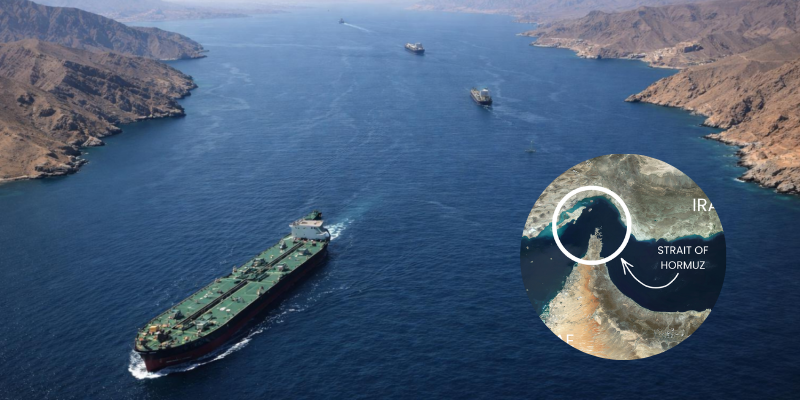
Fertilizer prices jumped sharply this past week following the closure of one of the world’s most critical shipping routes and the timing is difficult, with spring applications right around the corner. The spike is being felt across the board, and California growers are getting hit alongside everyone else. Here is a breakdown of what is driving it, how it affects the crops grown here in the Valley, and what steps make sense right now.
What Caused the Spike
The trigger is the Strait of Hormuz, which is a 21-mile waterway between Iran and Oman that handles about one-third of global fertilizer trade. While Iran has not officially closed the strait, ships have largely stopped moving through it and most insurers have pulled their war risk coverage, effectively bringing traffic to a halt. The result for fertilizer markets has been nearly the same as an outright closure. On top of that, Qatar Energy shut down the world’s largest single urea production facility after losing its natural gas feedstock, and three major fertilizer plants in India have already cut output as a result.
USDA’s Agricultural Marketing Service reported that urea prices in one key market jumped from around $645 per ton at 8:15 a.m. on Friday to $760 per ton by 10:00 a.m. the same day a $220 per ton increase from Monday morning alone. One supplier said they simply could not provide a quote at all by late in the week.
How Bad Is the Price Jump?
In the Pacific Northwest, the most relevant USDA market report for California pricing, the latest figures show MAP (Monoammonium Phosphate, 11-52-0) ranging from $890 to $1,270 per ton, averaging $1,132 per ton. Liquid nitrogen (32-0-0) is running $660 to $707 per ton. These are real numbers your input supplier is working from right now.
One farmer in South Dakota told Bloomberg he rushed to secure a last few truckloads of urea on Monday morning when the conflict escalated and paid 22% more than he had late last year, calling it the highest price he had ever paid. Analysts at Morningstar have warned publicly that if the closure lasts more than a few weeks, nitrogen prices could roughly double from pre-conflict levels.
This Is Not a New Problem — It Just Got Worse
USDA economists have been tracking fertilizer price volatility closely since the major spikes of 2021 and 2022, when anhydrous ammonia peaked above $1,600 per ton and urea surpassed $1,000 per ton. While prices trended down from those highs through 2023 and 2024, they never fully returned to pre-2021 levels and this new disruption is hitting a market that never fully recovered its footing.
China, normally the world’s largest phosphate exporter, sharply cut exports in 2025 and has signaled it will not resume until August 2026. European fertilizer producers have been operating at reduced capacity since losing access to cheap Russian natural gas. The global supply base was lean heading into 2026 before any Middle East disruption began.
What This Means Crop by Crop
Tree Nuts
Tree nuts are heavy nitrogen users, with spring applications timed to early canopy development and nut fill being among the most important of the season. With urea prices potentially heading significantly higher, growers who have not yet locked in nitrogen pricing should move quickly. Advisors are leaning strongly toward securing what you need now rather than waiting.
Citrus
Citrus are among the heaviest fertilizer consumers of any California specialty crop, requiring multiple split nitrogen applications through the season alongside phosphate and micronutrient programs. Growers running drip or micro-sprinkler systems have an advantage here. By fertigating in smaller, more frequent doses rather than one large up-front purchase can help manage cash flow under volatile pricing conditions.
Stone Fruit
Spring nitrogen applications are critical for stone fruit coming out of dormancy. They affect fruit sizing and overall crop load. That said, targeted applications based on current tissue and soil testing may allow growers to reduce overall fertilizer volume without sacrificing yield goals. Talk to your PCA before committing to a full program at today’s prices.
Row Crops
Row crop growers using large volumes of nitrogen, particularly cotton and processing tomato producers, should move on input pricing quickly. Processing tomato acreage commitments with canneries are being finalized right now, and higher input costs should factor into your per-acre contract evaluations. USDA data shows fertilizer represents 33% to 44% of corn operating costs and 34% to 45% of wheat operating costs in a typical year.
The Bottom Line for Valley Growers
The consensus among industry analysts right now is straightforward: do not wait hoping prices come back down. There are far more scenarios that lead to flat or higher prices than lower ones between now and peak spring application season, and if the Strait of Hormuz stays closed for several more weeks, availability could become a bigger problem than price alone. If you have not yet locked in your nitrogen or phosphate, move quickly.
That said, buying under pressure is also where growers overspend. Before finalizing your program, get current soil and tissue tests done. With inputs priced where they are, applying more than your trees or fields actually need is money directly out of your pocket. Your PCA can help you identify where pulling back carries low yield risk versus where under-applying will genuinely cost you come harvest time.
If your irrigation system allows, fertigating in splits rather than one large up-front purchase spreads your exposure across the season and gives you more flexibility as the market moves. And keep in mind that applications across much of the region were already down roughly 20% from normal last fall — fields heading into spring with existing nutrient deficits carry real yield risk if you cut back further.
The situation in the Middle East remains fluid, and nobody knows how long the disruption will last. What is clear is that the global fertilizer market was already running lean before this happened, and California growers are competing for the same limited supply as everyone else. Stay in close contact with your input supplier, keep an eye on the USDA AMS weekly price reports, and make decisions based on what your operation actually needs — not on where you hope the market will go.