
California Is Testing Solar Panels Over Its Water Canals — Here’s What the Early Results Suggest
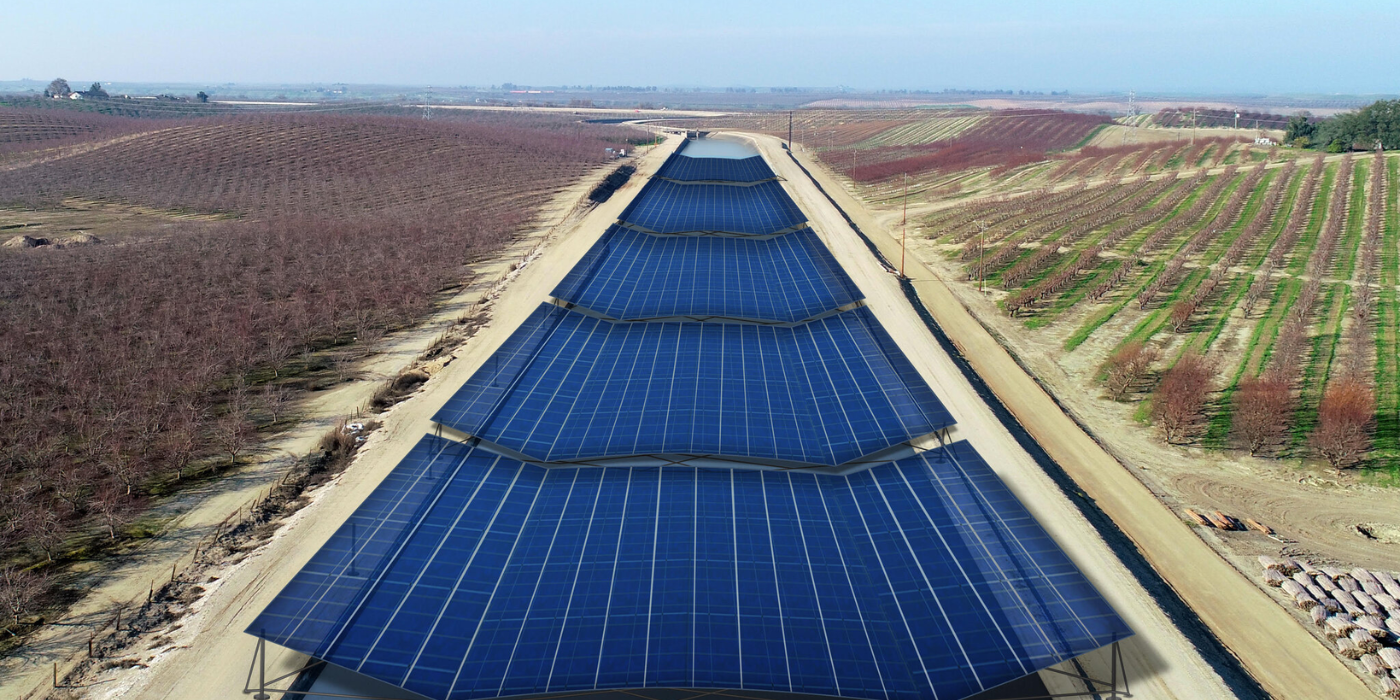
California’s experiment with installing solar panels above water canals is moving beyond theory and into early operational reality. The approach is being evaluated through active pilot projects led by state agencies, water districts, and academic researchers, including the University of California system. What began as a research-backed concept is now being actively tested, with state agencies, water districts, and researchers assessing whether the approach can deliver measurable gains in both water conservation and renewable energy generation.
The premise is simple: mount solar arrays above existing canal infrastructure to shade flowing water, reducing evaporation, while simultaneously producing electricity without consuming new land. The execution, however, is now where attention is focused.
From Concept to Active Pilot
The state’s flagship effort, known as Project Nexus, is currently operating on select canal segments in the Central Valley. Led by the Turlock Irrigation District in partnership with the California Department of Water Resources, University of California researchers, and private-sector developers, the project is designed to evaluate real-world performance rather than modeled outcomes.
Researchers are monitoring several variables simultaneously: power generation, evaporation reduction, structural performance, maintenance needs, and grid integration. The goal is to understand whether canal-spanning solar can scale beyond demonstration sites and integrate into California’s broader water and energy systems.
What the Data Suggests So Far
The interest in Project Nexus stems largely from earlier University of California analysis published in Nature Sustainability, which estimated that statewide deployment could add roughly 13 gigawatts of solar capacity while reducing annual canal evaporation by approximately 60 billion gallons of water — an amount comparable to the yearly residential water needs of about two million people.
While those figures remain estimates, the current pilots are testing the assumptions behind them. Early observations suggest that shading meaningfully limits evaporation, while the proximity to water may help moderate panel temperatures, improving efficiency relative to traditional ground-mounted systems, a benefit noted by researchers and project developers involved in canal-based solar systems.
Just as importantly, the pilots are generating practical insights into construction logistics, permitting complexity, and long-term operations — factors that will ultimately determine whether the model is viable at scale.
Why This Matters Now
The timing of this pilot is significant. California continues to pursue aggressive renewable energy targets while facing increasing scrutiny over land use, grid congestion, and agricultural water efficiency. Solar-over-canal infrastructure directly intersects all three issues:
- Water resilience: Evaporation losses from open canals represent a persistent, structural inefficiency, regardless of annual rainfall variability.
- Land constraints: Canal-mounted systems avoid competing with farmland or sensitive habitat for solar development.
- Grid proximity: Many canals already run near agricultural load centers, potentially simplifying energy distribution compared to remote solar installations.
As state agencies evaluate long-term infrastructure investments, these combined benefits are driving renewed interest in the approach, particularly as California pursues aggressive renewable energy and water resilience goals.
The Open Questions
Despite its promise, the model is not without challenges. Engineers and policymakers are closely examining:
- Capital and maintenance costs relative to ground-mounted solar
- Permitting and environmental review requirements
- Structural adaptability across different canal widths and flow conditions
- Grid interconnection feasibility in rural regions
The answers to these questions will determine whether solar-over-canal systems remain a niche innovation or become a meaningful component of California’s renewable and water management strategy.
Looking Ahead
Rather than a breakthrough discovery, California’s canal solar effort is now best understood as an infrastructure test case — one that reflects a broader shift toward integrated solutions for water, energy, and land use challenges. As data from Project Nexus continues to emerge, policymakers and water districts will be watching closely to see whether this model can move from pilot projects to scalable deployment.
For a state balancing climate goals with agricultural productivity and water security, the results could shape how future infrastructure investments are prioritized.