
California Achieves 100% Drought-Free Conditions for the First Time in 25 Years
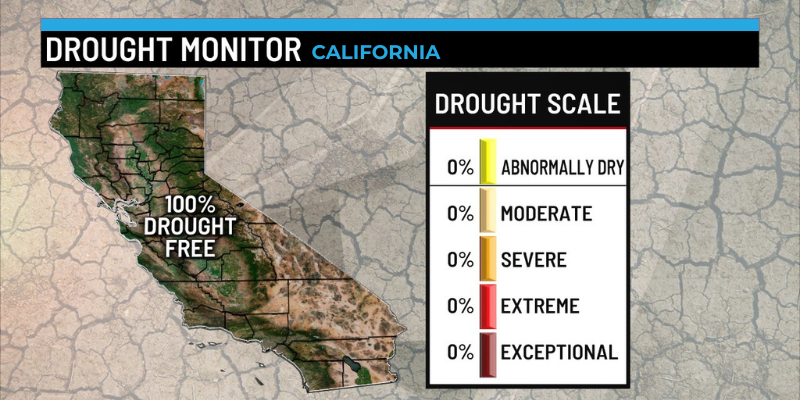
For the first time in more than a quarter-century, California is completely drought-free, with zero areas in the state classified as abnormally dry or in drought, according to the latest data from the U.S. Drought Monitor. This milestone reflects a dramatic turn in conditions following an above-average wet season that has significantly improved statewide moisture levels.
What Does “Drought-Free” Actually Mean?
The U.S. Drought Monitor maps conditions across the U.S. using a standardized classification system from D0 (Abnormally Dry) to D4 (Exceptional Drought). These categories integrate dozens of indicators—including precipitation, soil moisture, streamflow, snow cover, and reservoir levels—evaluated by climate scientists and hydrologists from the National Oceanic and Atmospheric Administration (NOAA), the U.S. Department of Agriculture (USDA), and the National Drought Mitigation Center.
According to the most current California drought map, all drought and dryness categories are at 0% statewide, meaning no part of California is currently classified as abnormally dry or worse.
Historic Context
California has long been known for its pronounced dry spells, with extended droughts in the 2010s and early 2020s stressing water supplies, agriculture, and ecosystems across the state. But after significant rainfall and storm activity in late 2025, the state’s drought indicators improved rapidly, and for the first time since December 2000, no areas meet the threshold for drought or dryness classification.
Drivers of the Change
Meteorological data show that California experienced an unusually wet start to the 2025–2026 water year (which runs from October through September), with precipitation totals significantly above average in many regions. Heavy autumn and winter storms delivered sustained rainfall that helped replenish reservoirs, raise soil moisture, and reduce drought indicators across the state.
The increase in precipitation also helped recharge major reservoirs to well above average levels, though snowpack levels remain a concern in some mountain regions due to more precipitation falling as rain rather than snow. Scientists emphasize that while the drought classification has changed, long-term water storage and climate variability remain ongoing challenges.
What This Doesn’t Mean
Being drought-free on the U.S. Drought Monitor map does not imply that all water issues are solved. It reflects current conditions relative to drought thresholds but does not directly measure everything that influences water management or ecosystem health. Reservoir capacity, groundwater levels, and future precipitation trends still require careful monitoring, especially as California’s climate continues to experience significant variability.
Looking Ahead
Experts caution that drought status can change quickly if dry conditions return. The state’s current drought-free status is valid as a snapshot in time—updated weekly—so ongoing precipitation patterns and water demand will influence future conditions. Continued monitoring and sustainable water management practices remain essential for long-term water security.