
Growing Through Service: How 4-H Shaped Lana Cederlof’s Leadership, Values, and Vision for the Future
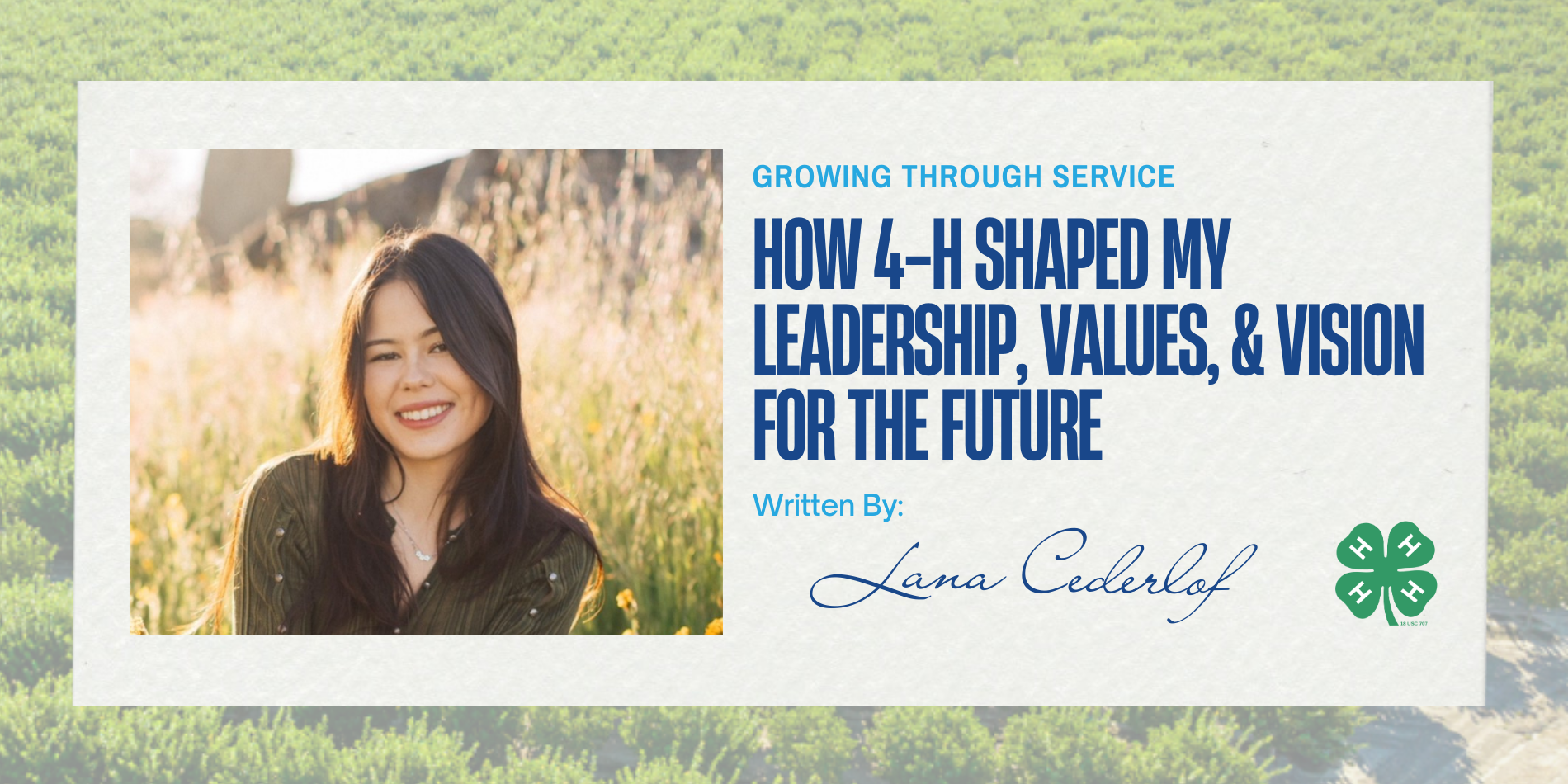
I grew up in the countryside just outside of Chowchilla, where being outdoors was simply part of everyday life. From making mud cakes in my backyard to exploring the natural landscapes near my grandparents’ home in Thailand, I developed a deep appreciation for the environment at a young age. After attending elementary school in town, I commuted daily to University High School in Fresno—an experience that further shaped my independence and perspective.
Today, I am a student in Cal Poly San Luis Obispo’s five-year landscape architecture program. My academic path reflects a long-standing passion for environmental design and literacy, and during my time at Cal Poly, I hope to explore the many ways landscape architecture can intersect with agriculture, community, and education.
How 4-H Became Home
My journey with 4-H began in a simple and unexpected way. Family friends gifted me a young Holland Lop rabbit and introduced us to our local 4-H community so I could learn rabbit showmanship. What started as a project quickly became something much larger. During my early years in the program, I was guided and supported by individuals who created a welcoming and encouraging environment—one that left a lasting impression on me.
That sense of belonging became the foundation of my 4-H experience. As I grew older, my desire to recreate that same supportive community for others shaped my involvement as a senior member. Leadership roles, community service, and mentorship became ways for me to give back to a program that had given me so much. Each year I re-enrolled, it was because I felt honored to be part of something far greater than myself.
The Meaning Behind the Diamond Clover
Earning the Diamond Clover Award marked a meaningful transition—from 4-H member to alumni—and symbolized the culmination of years of leadership and service. As a younger member, I looked up to Diamond Clover recipients and deeply respected their dedication. Receiving the award myself was both humbling and affirming.
More than recognition, the Diamond Clover represents personal growth. My experiences in 4-H shaped not only my leadership abilities, but also the person I have become. I hope my journey encourages others to pursue the award, while also finding value in every step along the way—not just the final achievement.
Growth Through Leadership and Service
As I worked toward the Diamond Clover, I realized that growth required more than developing technical skills. I needed to strengthen my soft skills—communication, adaptability, and empathy. These were tested most notably during my role as chair of the Clovers for Fido fundraising campaign, a multi-year service-learning project.
Leading this effort required flexibility and awareness. I often had to adjust plans based on participation and tailor my communication to different audiences. Through this experience, I learned the importance of understanding who you are speaking to and how to communicate in a way that teaches, motivates, and inspires. Those lessons continue to guide me today.
Representing Something Bigger Than Myself
One of the most influential experiences in my 4-H journey was serving as a California 4-H State Ambassador. This role challenged me in new ways and allowed me to learn alongside fellow ambassadors, advisors, and 4-H members from across the nation. I came to see the position not just as a service opportunity, but as an honor.
Representing such a diverse and expansive program pushed me to develop a deeper understanding of others. The connections I built—with advisors, teammates, and peers—remain one of the most meaningful aspects of that experience. When I reflect on my time as an ambassador, I think most about how we grew together, both as leaders and as friends.
Lessons Beyond the Classroom
Over my 11 years in 4-H, I learned that leadership is not about individual achievement—it is about service to others. This shift in perspective has influenced how I approach leadership in every sphere of my life. 4-H helped me identify my passions, navigate both success and failure, and develop resilience in the face of setbacks.
Through leadership roles at the local, state, and national levels, I learned to value every step of the journey. That mindset—embracing challenges as opportunities to learn—will continue to drive my future pursuits.
Youth Shaping the Future of Agriculture
Agriculture today is evolving rapidly, and young leaders are uniquely positioned to help guide that progress. With increased access to information and exposure to STEM education, my generation has the tools to think critically and develop innovative solutions to modern challenges. Programs like 4-H play a crucial role in building communication, teamwork, and leadership skills that will be essential to the future of the industry.
Overcoming Uncertainty and Finding Direction
One of the challenges I faced in my leadership journey was uncertainty—wondering where to focus my energy and how to move forward. I learned to navigate this by identifying my “sparks” and aligning my responsibilities with my passions. Conversations with mentors and peers within the 4-H program helped me clarify my goals and develop strategies to reach them.
The Power of Mentorship
Mentorship has been instrumental in my growth. My public speaking project leader, Mrs. Bitter, has been a constant source of encouragement—from my earliest demonstrations to my final senior speech. Through awkward recitations, constructive feedback, and warm chocolate chip cookies, she helped me build confidence and embrace discomfort as part of growth.
Her support, along with the generosity of the Bitter family, has encouraged me to pursue leadership roles and explore professional goals at the intersection of landscape architecture and agriculture.
Looking Ahead
After college, I plan to work as a landscape designer while completing the requirements for licensure as a landscape architect. My background in 4-H, agriculture, and education will continue to influence my work, guiding me to design spaces that thoughtfully integrate agricultural practices and community needs. Ultimately, I hope to positively impact agricultural communities while expanding the boundaries of landscape architecture.
A Word of Advice
Much of my personal growth came from opportunities I took on a whim. Trying something new can be uncomfortable, but I believe it is always worthwhile. Success is rewarding, but failure is often where the most growth occurs.
Above all, I have learned the importance of relationships. The connections I have built across my many spheres of involvement have provided support, encouragement, and a sense of belonging. I hope others remember not to let their pursuit of achievement overshadow the value of community—because those relationships are what truly sustain us.